
Transform Your Space with Italian MinimalistRestaurant-Inspired 3D Wall Decor
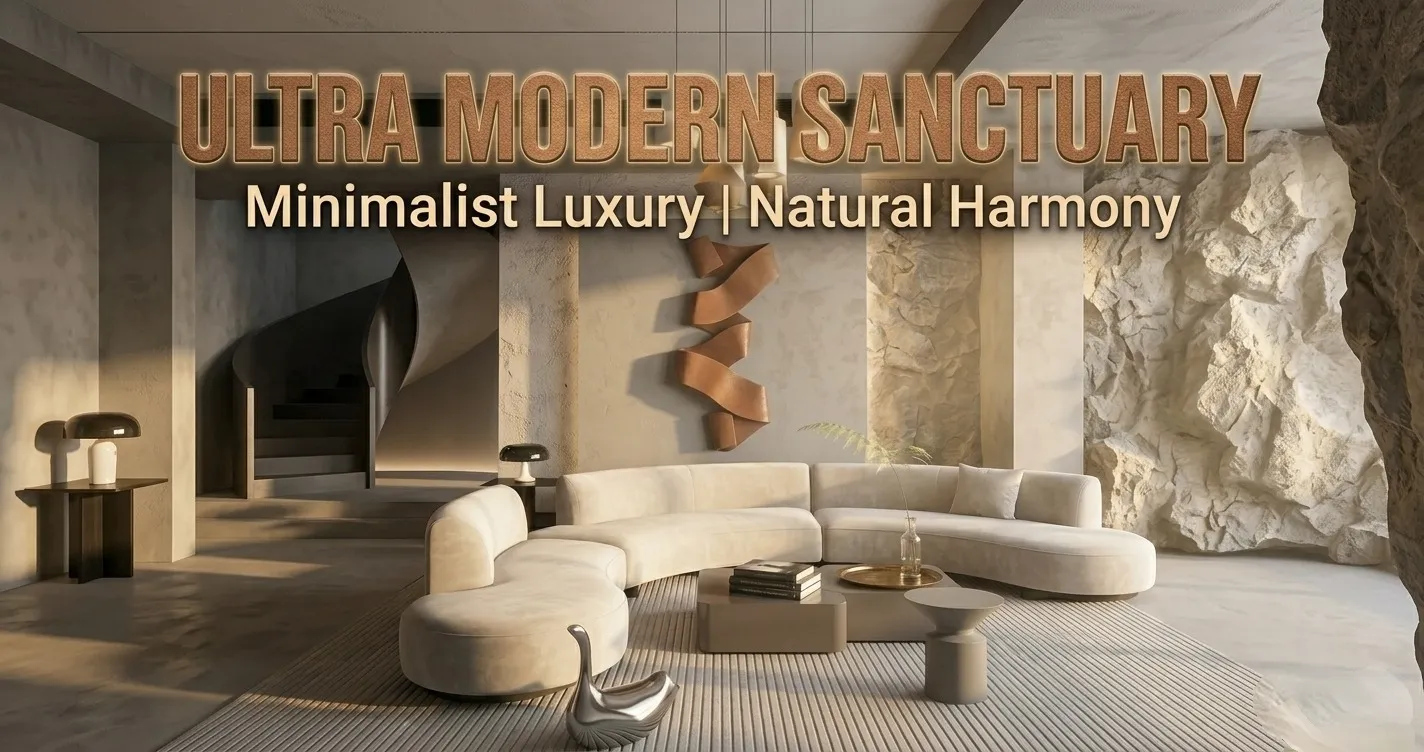
Creative Hotel Wall Pendants & Modern Wall Decoration Ideas
━━━━━━━━━━━━━━━━━━━━━━━━━━━━━━━━
Why Italian Minimalist 3D Wall Decor Is Taking Over Every Beautiful Space
Imagine walking into a room and feeling your breath catch.
Not because of loud colors or busy patterns. But because of one stunning wall.
A wall with depth. With texture. With soul.
That is exactly what Italian minimalist 3D wall decor does. It turns any empty wall into a work of art. Whether it is a cozy home, a boutique hotel lobby, or a restaurant that wants to feel like a dream — this style delivers.
Right now, this aesthetic is everywhere. On Pinterest boards with millions of saves. In five-star hotel interiors. In Michelin-starred restaurants. And increasingly, in the homes of people who simply want their space to feel extraordinary.
In this article, you will discover what makes Italian minimalist interior design so magnetic, how to choose the right pieces, how to style them like a professional, and where to use them to create maximum impact.
Let us begin.
What Is Italian Minimalist 3D Wall Decoration?
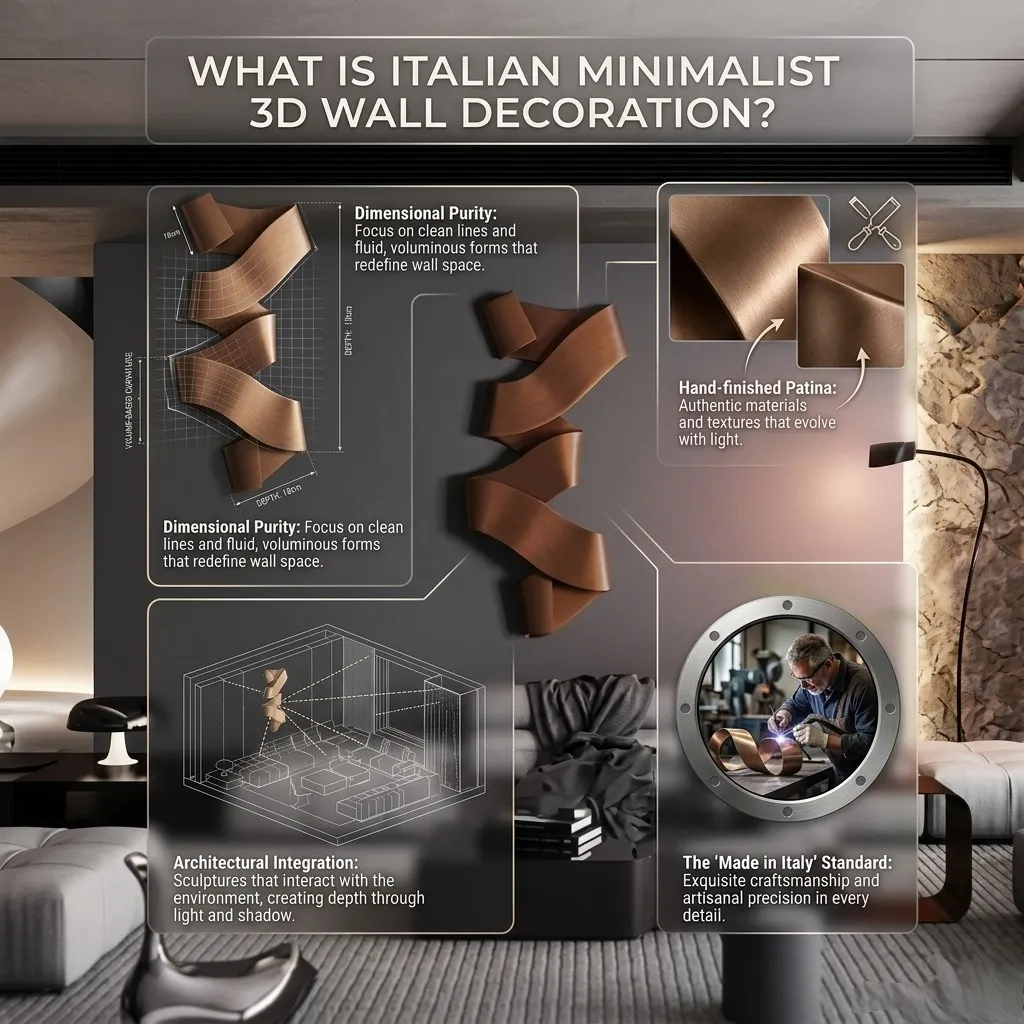
Italian minimalism is not just a style. It is a philosophy.
It says: less is more. But what is here must be exceptional.
When this philosophy meets 3D wall art, something magical happens. You get pieces that are simultaneously simple and deeply complex. Quiet yet powerful. Empty-looking from a distance, yet rich with detail up close.
The Core Elements of This Style
Italian minimalist 3D wall decor is defined by a few key characteristics:
✦ Neutral, earthy color palettes — ivory, terracotta, warm white, stone gray, aged gold
✦ Geometric and organic shapes inspired by Renaissance architecture and the Italian landscape
✦ Texture over pattern — the visual interest comes from shadow and depth, not from color
✦ Premium materials — plaster, ceramic, travertine-look resin, wrought iron, brushed brass
✦ Negative space used as a design element, not an absence of design
The result is wall decor that feels simultaneously timeless and completely contemporary. It fits in a 15th-century Venetian palazzo just as well as a sleek modern apartment in Milan or a boutique hotel in Tuscany.
This is why interior designers around the world are obsessed with it.
The Rise of 3D Wall Art in Restaurant and Hotel Interiors
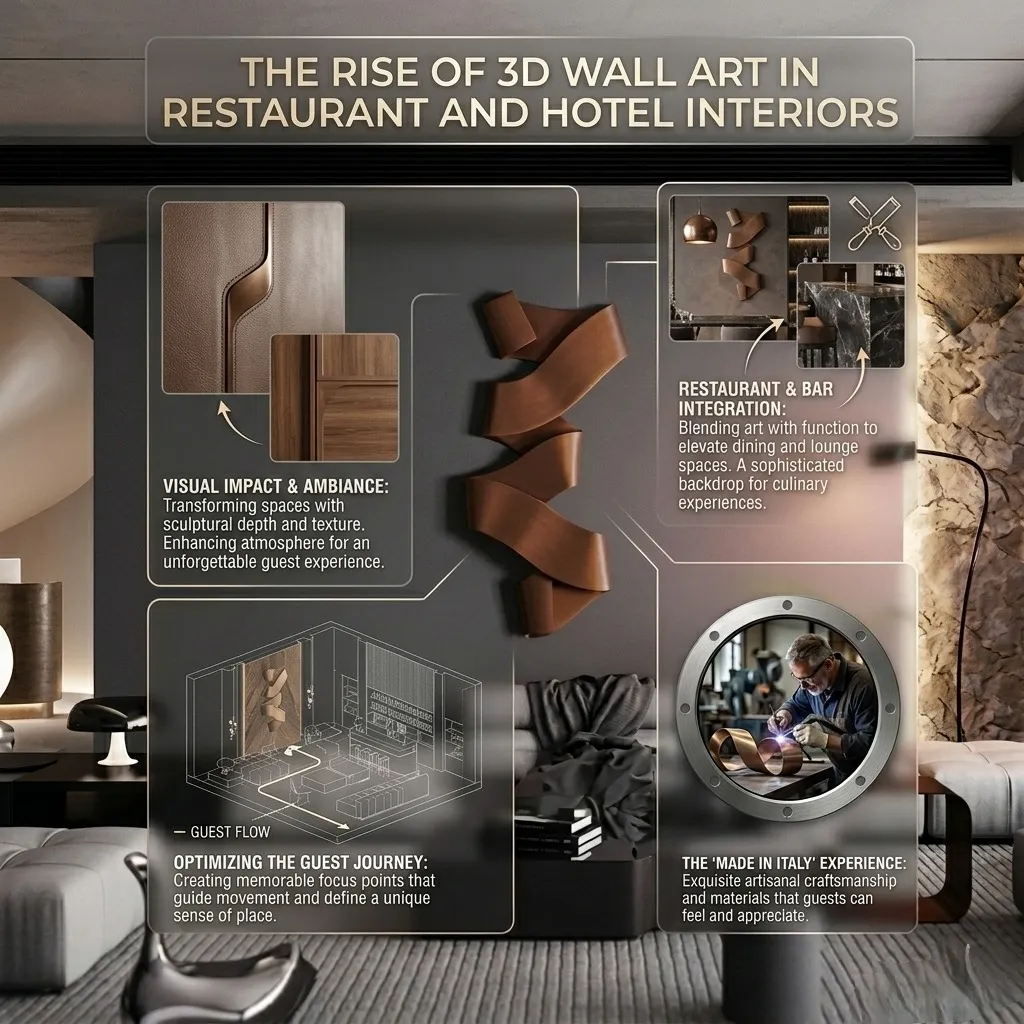
Walk into any world-class restaurant or hotel today and look at the walls.
Chances are, they are not flat. They are alive.
The hospitality industry discovered something years ago: the wall behind the guest is the most photographed surface in any space. It is the backdrop for birthday dinners, honeymoon selfies, business lunches, and anniversary celebrations.
A beautiful 3D wall decoration does not just look good. It becomes a reason people choose your venue. It becomes the background in hundreds of photos shared on social media. It creates what designers call a ‘moment’ — a spot so beautiful that guests have to stop and look.
Why Hotels and Restaurants Choose This Style
✦ It photographs beautifully in natural and artificial light
✦ It works in large and small spaces equally well
✦ It creates a premium, elevated atmosphere without feeling cold or sterile
✦ It is durable and low-maintenance compared to painted murals
✦ It communicates quality and craftsmanship — things guests and diners want to feel
The best hotel and restaurant wall decor installations tell a story. A wall of interlocking terracotta arches in a Sicilian-inspired restaurant transports diners. A lobby wall of cascading plaster leaf forms in a Milan boutique hotel makes you feel like you have arrived somewhere extraordinary.
And now, these same design principles are making their way into homes.
Types of Italian Minimalist 3D Wall Pendants and Panels
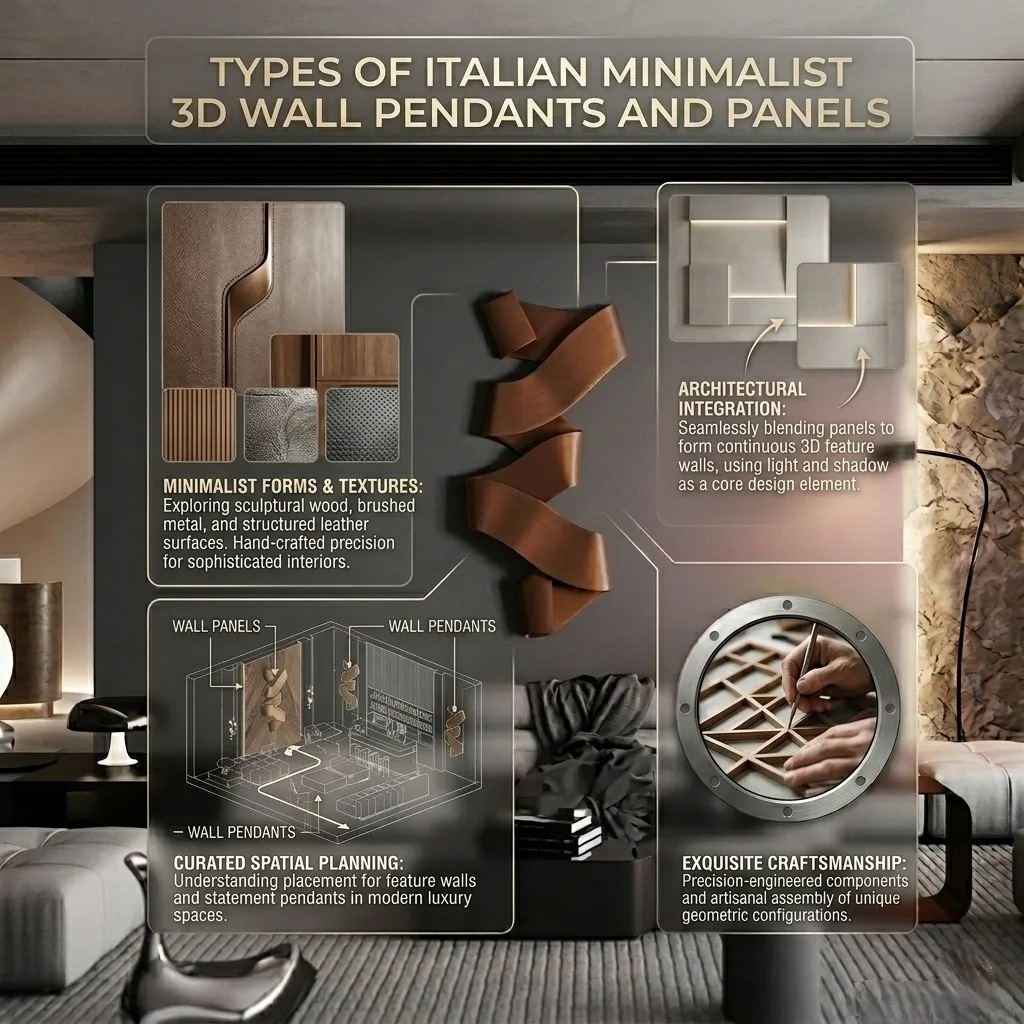
Not all 3D wall decor is created equal. Let us look at the main categories available today and what makes each one special.
1. Wall Pendants and Hanging Sculptural Wall Art Pieces
Wall pendants are three-dimensional sculptural wall art objects that hang from the wall rather than sitting flat against it. They create the most dramatic shadow play and depth.
Italian-inspired wall pendants often take the form of abstracted architectural elements: arches, columns, folded fabric, cascading leaves, or geometric forms with deep relief.
They work exceptionally well as singular statement pieces above a sofa, bed headboard, or dining table.
2. Modular 3D Wall Panels
Modular panels are designed to be combined in different configurations, giving you total creative control. You can create a small accent cluster or cover an entire feature wall.
Italian minimalist interior design modular panels typically feature geometric patterns — hexagons, chevrons, layered rectangles — or organic forms like overlapping petals and waves.
They are popular in both residential and commercial spaces because of their flexibility and scalability.
3. Architectural Relief Panels
These are larger, single-piece decorative panels with high relief (deep three-dimensional carving or molding). They mimic the look of carved plaster or stone walls found in historic Italian architecture.
Relief panels work beautifully as the focal point of a dining room, hotel corridor, or restaurant entrance wall.
4. Decorative Wall Wall Art Sculptures
Individual sculptural Wall art objects — abstract forms, stylized figures, botanical studies — that function like three-dimensional paintings. They add personality and a sense of curation to a space.
The best Italian-style wall sculptures feel like they could belong in a contemporary art gallery or an ancient Roman villa. That timelessness is part of their magic.
Choosing the Right 3D Wall Decor for Your Space
This is where many people get stuck. The pieces are beautiful. But how do you choose?
Here is a simple framework that professional interior designers use.
Step 1: Define Your Wall’s Purpose
Is this wall a background — something that frames the room without demanding attention? Or is it a focal point — the first thing eyes go to when you enter the space?
For background walls, choose low-profile panels in tones close to your wall color. The texture will be subtle and beautiful.
For focal point walls, go bolder. A large sculptural pendant, a high-contrast relief panel, or an arrangement of pieces that creates a real visual moment.
Step 2: Match the Material to the Light
This is perhaps the most important factor in 3D wall decor that most people overlook.
Three-dimensional wall art lives and dies by light. The shadows that fall across its surface are the whole point. Different materials catch light differently:
✦ Matte plaster creates soft, diffused shadows — elegant and understated
✦ Polished ceramic or glazed stoneware creates sharper, brighter highlights — more dramatic
✦ Brushed metals catch and scatter light — creates energy and warmth
✦ Natural wood or bamboo creates organic, warm shadow patterns — earthy and grounding
Before purchasing, think about the light sources in your space. Natural side light from a window creates beautiful, constantly shifting shadows. Warm overhead spotlights create deep, sculptural definition.
Step 3: Consider Scale
Scale is everything in interior design, and it is the most common mistake people make with wall art.
As a general rule: wall art should occupy between 60 and 75 percent of the available wall space. Most people choose pieces that are far too small.
A single large piece — or a curated cluster that functions as one large composition — always looks more intentional and sophisticated than a scattering of small pieces across a big wall.
Step 4: Stay Within the Color Story
Italian minimalist decor works because everything speaks the same language. Your 3D wall pieces should feel like they belong to the same family as your furniture, fabrics, and flooring.
Warm white walls pair beautifully with ivory plaster pendants and warm brass accents. Stone gray interiors look stunning with dark concrete-effect panels and matte black sculptures. Terracotta rooms come alive with pieces in sienna, sand, and sun-bleached bone.
How to Style 3D Wall Decor Like a Professional
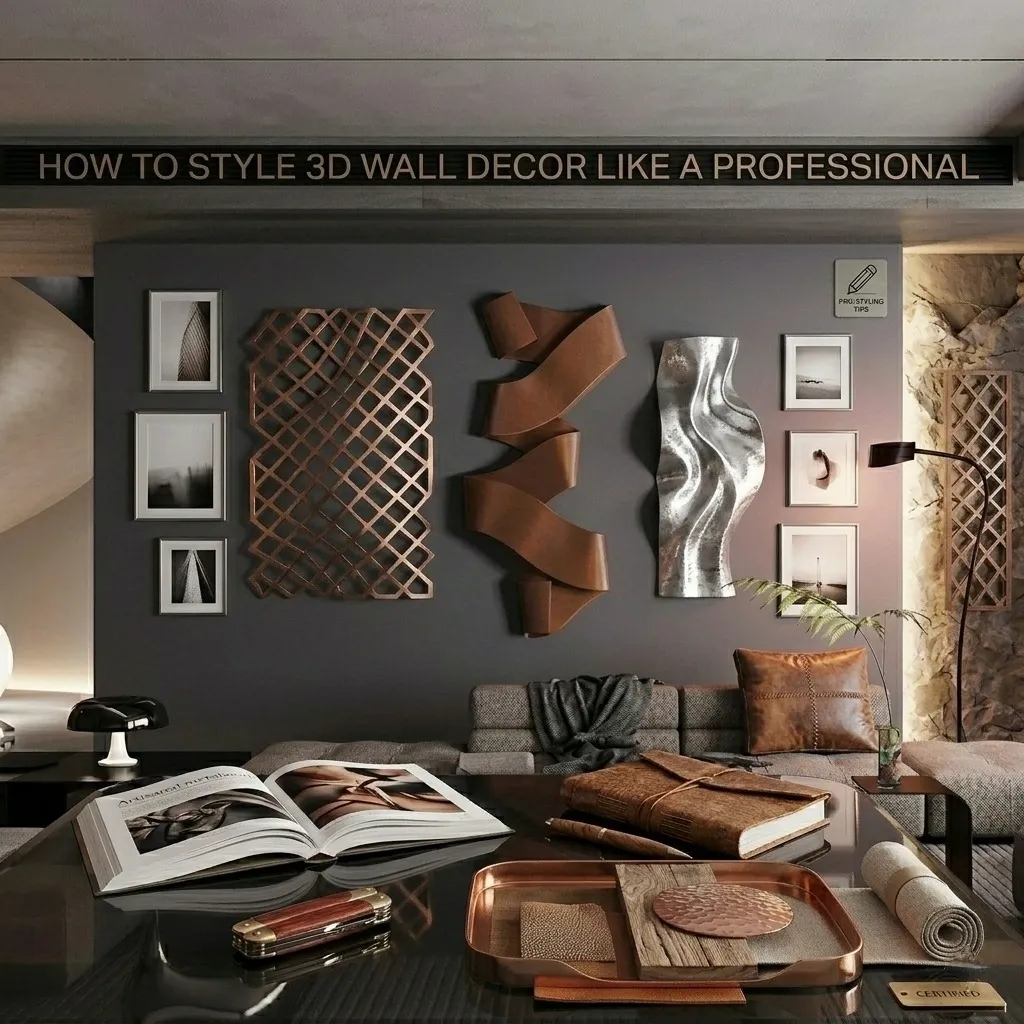
Choosing the right piece is only half the battle. How you style and position it determines everything.
The Gallery Wall Approach
A gallery wall using only 3D pieces in a cohesive palette is one of the most stunning effects you can create. The key is variation in depth, size, and form — while keeping color and material consistent.
Try mixing three types of pieces: a large anchor piece in the center, medium pieces flanking it, and small accent pieces filling in gaps. Leave generous negative space between pieces. Let the shadows breathe.
The Single Statement
Sometimes one extraordinary piece is more powerful than many. A large-scale wall pendant positioned above a bed, fireplace, or dining table becomes the anchor of the entire room.
When using a single statement piece, resist the temptation to add more. Let it stand alone. Let it have the wall to itself.
Lighting Your 3D Wall Art
Never underestimate the power of directional lighting for 3D wall decor. A simple adjustable spotlight positioned at a 30 to 45 degree angle to the wall will transform a flat-looking piece into something deeply dimensional and dramatic.
Warm Edison bulbs or 2700K-3000K LED spotlights create the most beautiful results. They make plaster and ceramic glow like they are lit from within.
Pairing with Natural Elements
Italian design has always loved the relationship between the crafted and the natural. Your 3D wall decor will look extraordinary when paired with:
✦ Dried botanicals in tall architectural vessels below or beside the wall
✦ A travertine or marble side table placed in front of the wall
✦ Curved furniture that echoes any organic shapes in the wall pieces
✦ Linen, raw silk, or woven textiles nearby to soften the texture contrast
Room-by-Room Guide: Where to Use 3D Wall Decorations
The Living Room
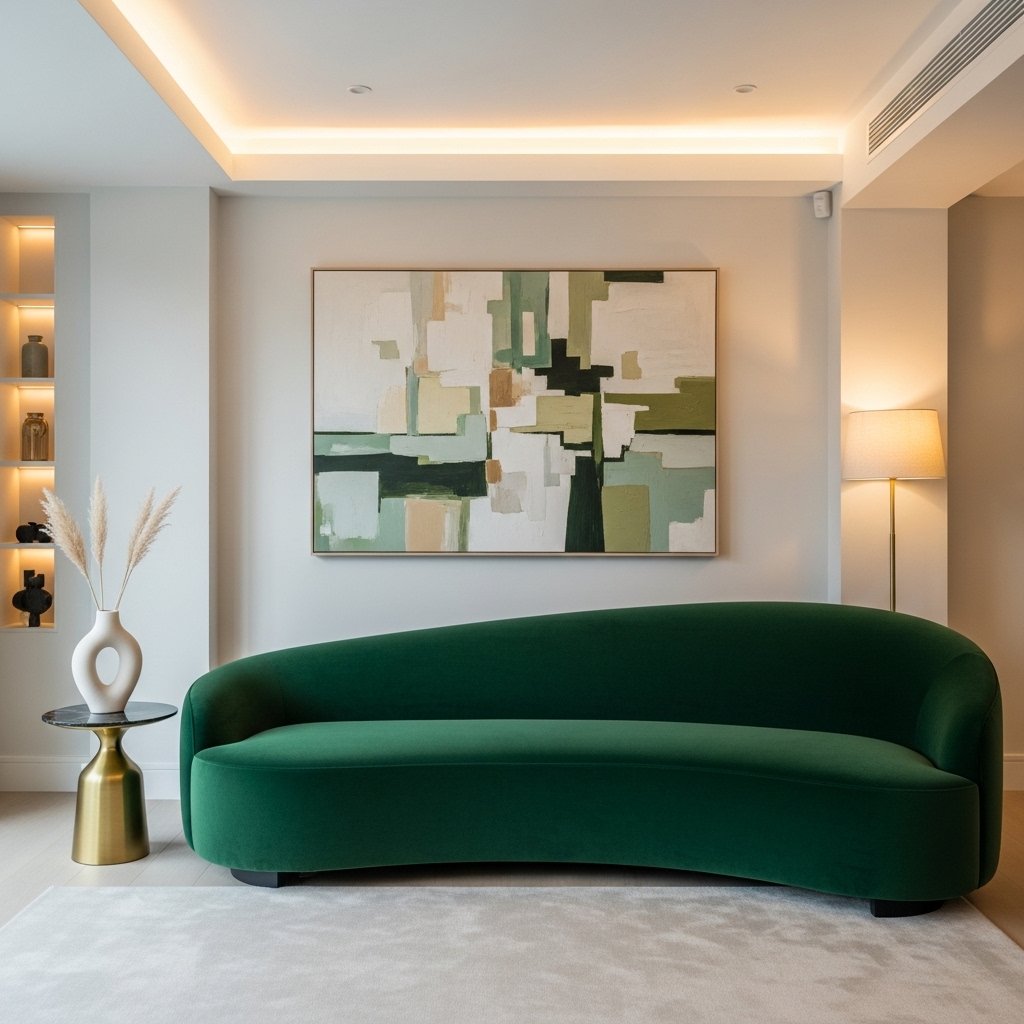
The living room is the most popular place for statement 3D wall decor, and for good reason. The wall behind the sofa — known as the feature wall — is the visual center of the space.
A large sculptural panel or a curated cluster of wall pendants above the sofa immediately elevates the entire room. It signals that this is a considered, intentional space.
Choose pieces with a horizontal emphasis to reinforce the long, grounding quality of the sofa.
The Bedroom
The wall behind the bed — the headboard wall — is perhaps the most intimate feature wall in any home. 3D wall art here creates a sense of sanctuary.
Consider symmetrical arrangements of two matching wall pendants flanking the center, or a single large arched relief piece that frames the bed like a crown.
In the bedroom, softer forms work best. Curved arches, draped fabric textures, floral reliefs. They add beauty without energy.
The Dining Room
A dining room with beautiful wall art on the wall adjacent to or opposite the table creates an extraordinary atmosphere for meals. Guests cannot help but notice and comment.
This is where restaurants get their power from. The right wall makes every dinner feel like a special occasion.
Choose pieces with vertical orientation for dining rooms. They draw the eye upward and make the space feel taller.
The Entryway
The entryway sets the tone for the entire home. A stunning wall piece here tells every visitor exactly what kind of space they are walking into.
Even a small entryway can accommodate a single dramatic pendant or relief panel. Given that people experience this space briefly and while moving, bold and simple works better than intricate and subtle.
Commercial Spaces: Hotels, Restaurants, and Offices
In commercial spaces, 3D wall decoration does two jobs. It creates atmosphere. And it creates content — a visual backdrop that guests and customers photograph and share.
For hotels, the lobby, restaurant, and corridor walls are the highest-impact locations. For restaurants, the wall visible from the entrance and the main dining room feature wall matter most.
Scale up significantly in commercial spaces. What looks bold in a home looks refined and appropriate in a larger commercial setting.
Materials and Craftsmanship: What to Look For
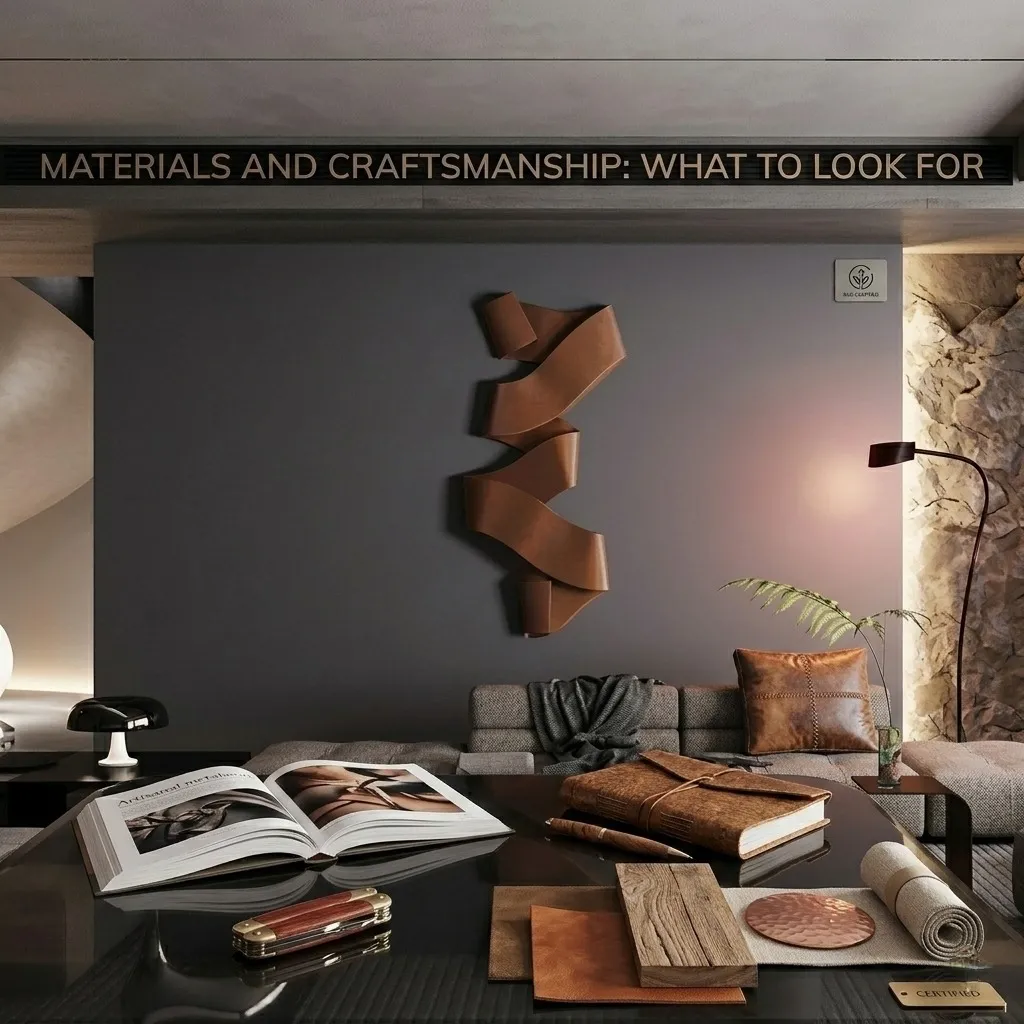
Quality matters enormously with 3D wall decor. The difference between a mass-produced piece and a handcrafted one is visible from across the room.
Plaster and Gypsum
Handcrafted plaster is the most authentic Italian material for decorative wall art. When done well, it has a luminous, almost organic quality. It catches light softly and beautifully.
Look for pieces with smooth, even surfaces and crisp edges on geometric forms. Irregularities in handmade plaster — slight variations in surface texture — are signs of craftsmanship, not flaws.
Ceramic and Stoneware
Ceramic wall art offers incredible durability and a richness of texture. Italian ceramic traditions are thousands of years old, and the best contemporary pieces carry that heritage.
Unglazed matte ceramics in earth tones are the most versatile for minimalist spaces. Partially glazed pieces — where the glaze breaks over textured surfaces — create beautiful visual complexity.
Resin and Composite Materials
Modern resin composites can achieve the look of stone, plaster, or terracotta at a lower weight and price point. The quality range is enormous.
The best resin pieces are indistinguishable from natural materials in photographs and look beautiful in person. Lesser quality pieces tend to look flat and plastic-like.
When evaluating resin pieces, look for weight that feels appropriate to the material it mimics, surface variation that mimics natural texture, and matte or semi-matte finishes rather than high gloss.
Metal and Mixed Media
Wrought iron, brushed brass, blackened steel, and hand-hammered copper all have long traditions in Italian decorative arts.
Metal 3D wall art introduces a different quality of light interaction — brighter, more dynamic. It works beautifully in spaces with other metal accents and in more contemporary interiors.
Pinterest-Perfect Arrangements: 7 Layouts That Always Work
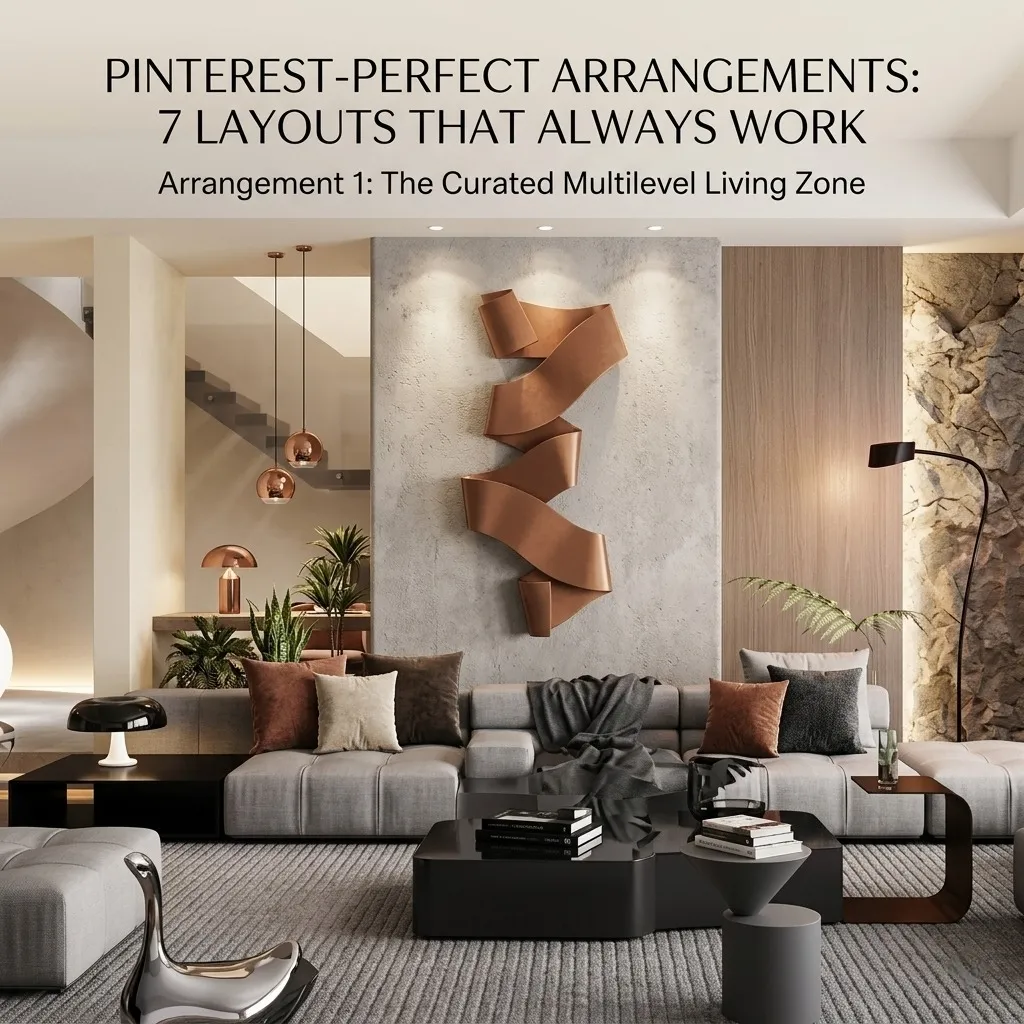
Interior designers use the same proven arrangement formulas again and again. Here are seven that always look stunning with Italian 3D wall decor.
1. The Singular Icon
One large, extraordinary piece. Centered. Surrounded by generous space. The more negative space around it, the more powerful it becomes. This arrangement works for any wall size when the piece is scaled correctly.
2. The Architectural Triptych
Three matching or complementary pieces arranged horizontally or vertically. The most classic and symmetrical arrangement. Particularly beautiful above a long console table or bed.
3. The Organic Cluster
A loose, asymmetrical grouping of pieces in varying sizes. Arrange them on the floor first before hanging. You are looking for a composition that feels balanced but not rigid — like a constellation of stars.
4. The Vertical Column
Three to five pieces stacked vertically in a narrow column. This arrangement is perfect for tall, narrow walls like those in staircases, corridors, or between windows.
5. The Horizon Line
Multiple pieces arranged horizontally at the same height, creating a continuous band across the wall. The spacing between pieces creates rhythm. This works beautifully in dining rooms alongside the table.
6. The Asymmetric Feature Wall
A large composition covering most of a feature wall, with pieces clustered more densely on one side and trailing off toward the other. Creates movement and dynamism — it feels like the wall is in motion.
7. The Corner Wrap
An arrangement that begins on one wall and continues onto an adjacent wall, wrapping the corner. This is an advanced technique that transforms a room, making the walls feel alive and intentional.
The Italian Minimalist Color Palette Guide
Color is where Italian minimalist design truly distinguishes itself. The palette is earthy, warm, ancient, and deeply sophisticated.
Primary Tones to Work With
✦ Warm White — the color of fresh plaster and sun-bleached stone walls
✦ Ivory and Cream — softer and more human than pure white, endlessly versatile
✦ Terracotta — the iconic Italian earth tone, warm and grounding
✦ Sienna and Burnt Umber — deeper earth tones that add richness
✦ Stone Gray — cool and sophisticated, inspired by marble and granite
✦ Sand and Linen — the color of Italian beaches and old linen
✦ Aged Gold and Warm Brass — the glow of candlelight and historic gilding
✦ Matte Black — the depth of cast iron and old wrought metal
The most sophisticated Italian minimalist interiors use no more than three or four tones from this palette. The three-dimensional quality of the wall art provides all the visual complexity the room needs.
Resist the temptation to add bright or saturated colors. They will fight with the quiet power of the wall art.
Care and Maintenance of 3D Wall Art
Beautiful wall art deserves to stay beautiful. Here is how to care for different materials.
Plaster and Gypsum
Dust regularly with a soft, dry brush or the brush attachment of a vacuum on the lowest setting. Never use water or damp cloths on plaster — it can damage the surface. If your plaster piece chips, most can be repaired with matching filler and touch-up paint.
Ceramic and Stoneware
Ceramic is the easiest to maintain. Wipe with a barely damp cloth to remove dust. For unglazed ceramics, occasional application of a penetrating stone sealer will keep the surface fresh and protected, especially in humid rooms.
Resin and Composite
Wipe with a soft, slightly damp cloth. Avoid abrasive cleaners. Most high-quality resin pieces have UV-stable pigments, but keep them away from prolonged direct sunlight, which can cause fading over time.
Metal
Dust regularly and wipe with a dry cloth. For brass pieces, occasional application of a quality metal polish will maintain the warm glow. For patinated or intentionally aged metals, avoid polishing — you will remove the carefully developed surface finish.
Where to Source Italian Minimalist 3D Wall Decor
Finding the right pieces takes patience and discernment. Here are the best sources, from most accessible to most exclusive.
Online Artisan Platforms
Platforms like Etsy and similar curated marketplaces are filled with independent ceramic artists, plaster sculptors, and artisan metalworkers creating exactly this style of work. The advantage is direct access to makers — you can often commission custom sizes, colors, and configurations.
Specialty Interior Design Stores
High-end interior design stores in major cities increasingly carry curated selections of artisan wall decor. The ability to see pieces in person — to feel their weight, examine their surface, and understand their scale — is invaluable.
Direct from Italian and European Artisans
For the most authentic pieces, consider sourcing directly from Italian ceramic centers like Faenza, Deruta, and Caltagirone, or from contemporary Italian design studios. Many ship internationally and the quality difference is immediately apparent.
Trade Shows and Design Fairs
Salone del Mobile in Milan, Maison et Objet in Paris, and regional design fairs regularly feature extraordinary contemporary artisans working in this space. For interior designers and serious collectors, these events are invaluable.
Sustainable and Conscious Choices in Wall Decor
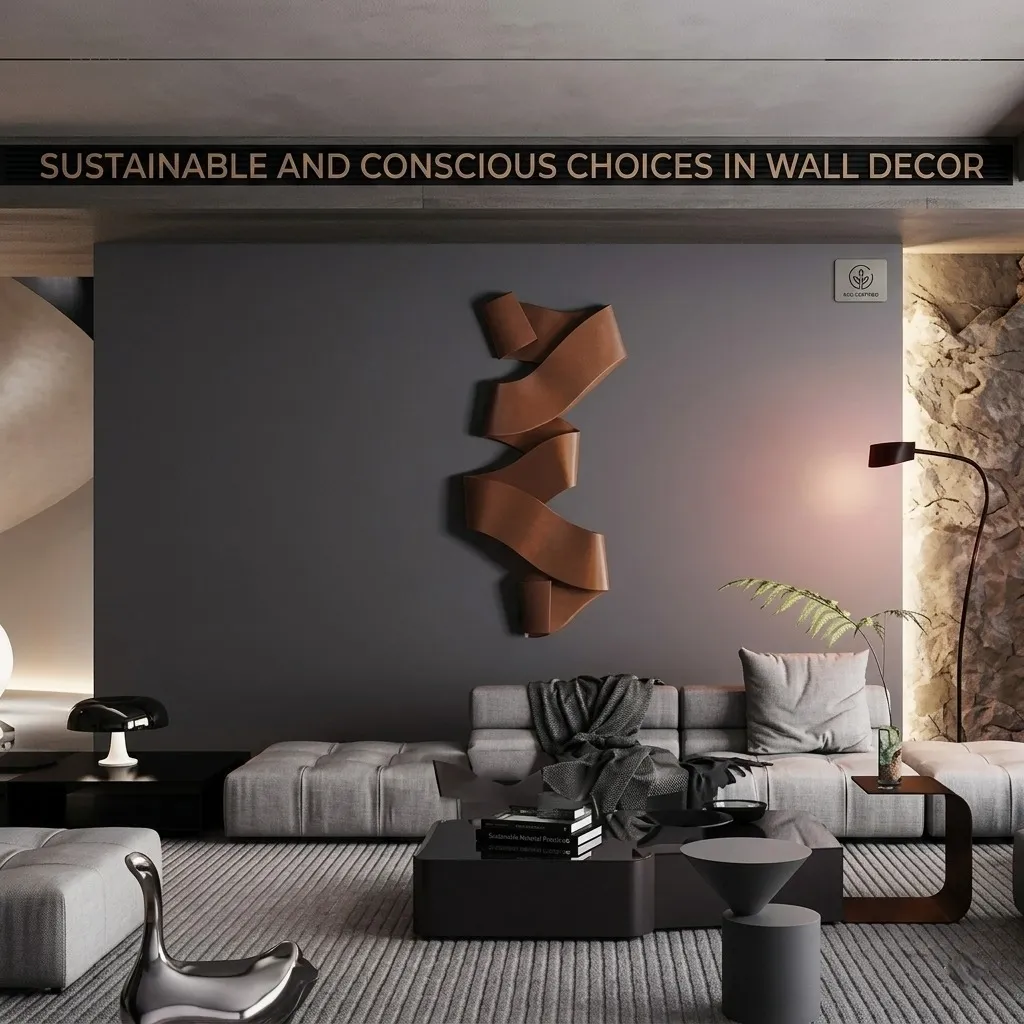
Beautiful spaces and responsible choices are not in conflict. Italian minimalist wall decor, by its very nature, tends toward sustainability.
Handcrafted pieces made from natural materials — clay, plaster, stone, sustainably sourced wood — have far smaller environmental footprints than mass-produced alternatives. They are also made to last. A quality piece of ceramic or plaster wall art will still be beautiful in fifty years.
When sourcing pieces, ask about materials and production processes. Artisans who use natural, locally sourced materials and traditional production methods are the most sustainable choice. Supporting individual craftspeople rather than large manufacturers also strengthens artisan traditions and communities.
Minimalist decor — by definition — means buying fewer, better things. That is the most sustainable design philosophy there is.
Creating Your Signature Wall: A Step-by-Step Process
📸 IMAGE PROMPT 10 — FINAL: Finished, beautifully decorated living room with Italian minimalist 3D wall decor installation. Curated arrangement of plaster sculptural pendants in ivory and warm sand above a curved cream velvet sofa. Late afternoon golden light. Magazine editorial quality. Vertical Pinterest format.
Let us bring everything together into a simple process you can follow right now.
Step 1: Photograph Your Wall
Take a straight-on photograph of the wall you want to transform. Note the dimensions. Note the light sources. Note what furniture is in front of or beside it.
Step 2: Define Your Intention
Do you want this wall to feel serene or dramatic? Warm or cool? Ancient or contemporary? The answer to these questions will guide every choice that follows.
Step 3: Choose a Palette
Pick two or three tones from the Italian minimalist palette that work with your existing room colors. These become the colors of your wall art pieces.
Step 4: Select Your Hero Piece
Choose the single most important piece first. Everything else will be built around it. This is the piece you love most — the one that made you catch your breath when you first saw it.
Step 5: Add Supporting Pieces
If you are creating a composition rather than a single statement, add supporting pieces that complement but do not compete with the hero piece. They should feel like part of the same family.
Step 6: Arrange Before You Hang
Lay everything out on the floor in front of the wall. Take a photograph from a standing distance. Study the composition. Adjust until it feels right.
Step 7: Light It
Once hung, spend time lighting your wall correctly. A single adjustable spotlight can completely transform how your 3D wall art reads in the space. Take your time with this step. It is worth it.
~ Final Thoughts ~
A beautiful wall is more than decoration.
It is the first thing you see in the morning. It is the backdrop of dinners, conversations, and quiet evenings. In a hotel or restaurant, it is part of every guest’s memory of that place.
Italian minimalist 3D wall decoration brings together the best of two worlds: the warmth and craft of centuries of Italian artisan tradition, and the clarity and elegance of contemporary minimalist design.
It is not about filling space. It is about honoring it.
Start with one wall. Choose one extraordinary piece. Light it beautifully. And watch how it transforms not just the room, but the way you feel in it.
That is the real power of beautiful wall art.
And now — it is yours.
Recent Comments