
22 Farmhouse Living Room Decor Ideas for a Cozy Interior
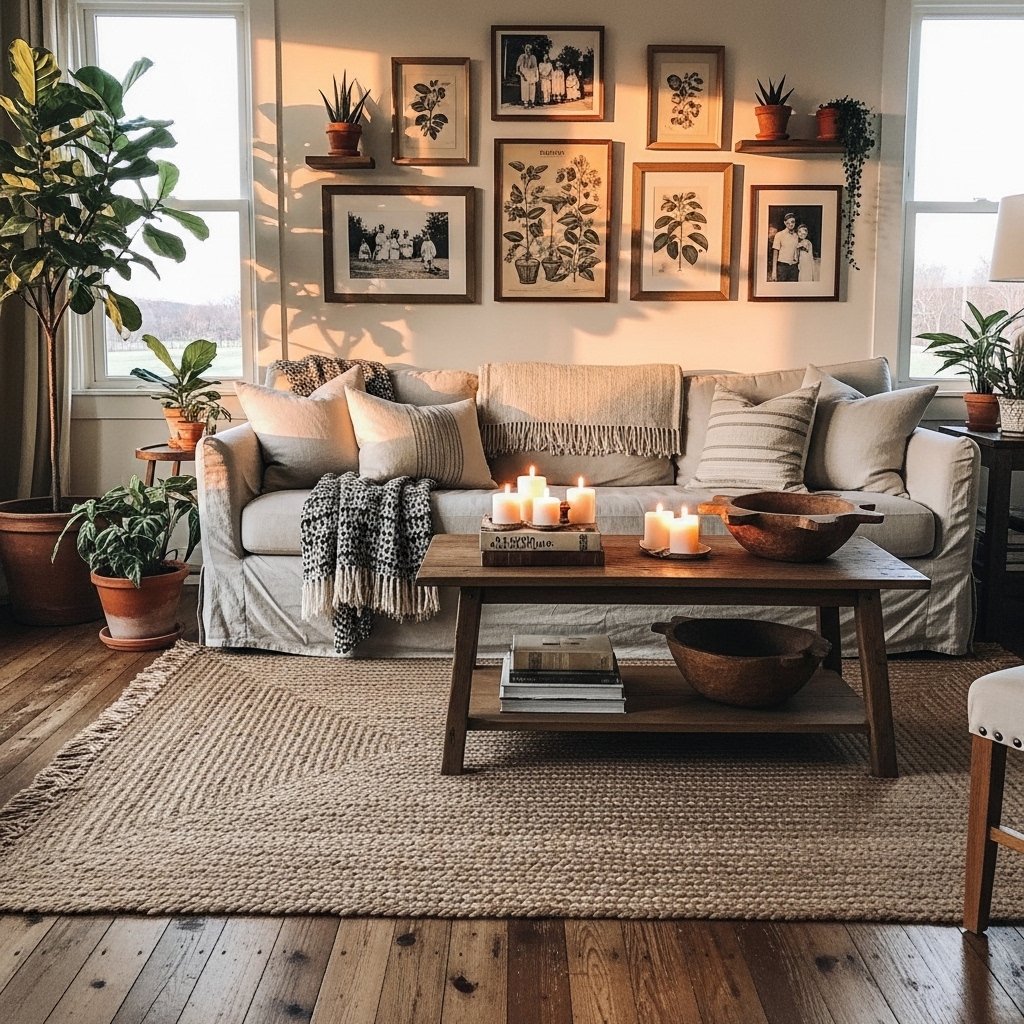
I still remember the exact moment I fell in love with farmhouse style. I was scrolling Pinterest at midnight — as you do — and stumbled across a living room photo that stopped me completely. Worn linen sofa, chunky wood coffee table, a basket overflowing with throw blankets, shiplap walls with a vintage clock. Everything looked effortlessly beautiful, like no one had tried too hard.
I thought: I can do this.
Then I looked at my actual living room — a hand-me-down leather sofa, mismatched furniture, and beige walls that had the personality of a hospital waiting room. And I laughed at myself a little.
But here’s the thing: three years later, my living room genuinely looks like those farmhouse photos. Not because I had a huge budget or hired a designer. I didn’t. I made mistakes, found some great secondhand pieces, did a few DIY projects, and slowly figured out what actually works versus what just looks good in a staged photo shoot.
This guide is the result of that experience. Twenty-two ideas, honestly explained. No vague design philosophy — just real, practical advice you can actually use.
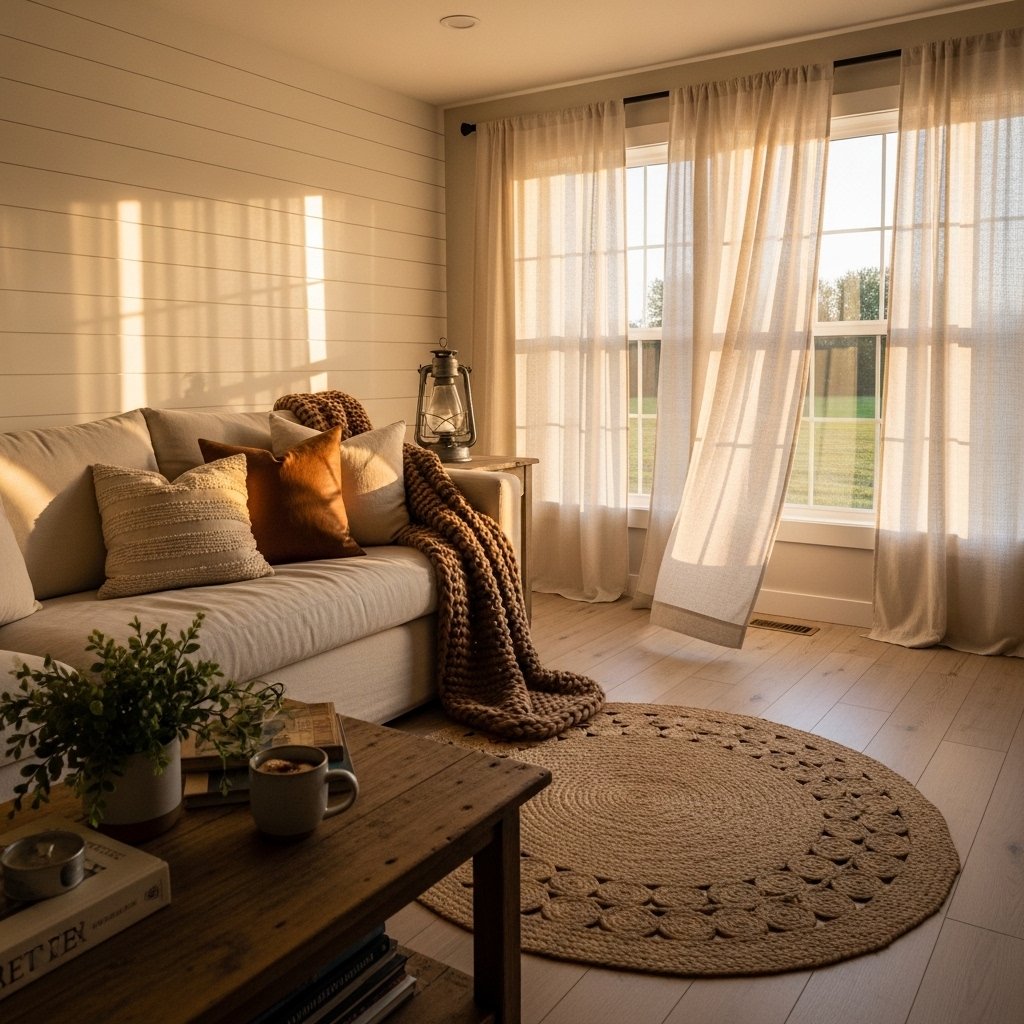
1. Start With the Right Wall Color — This One Decision Changes Everything
Most people make the mistake of buying furniture and accessories before they’ve sorted out their walls. Do the walls first. Everything else falls into place after.
For farmhouse style, skip pure white — it’s too cold and stark. What you want is a warm white, a soft greige (grey-beige blend), or a muted sage green. I used a warm creamy white in my living room and honestly, that single paint job transformed the space more than any furniture purchase I’ve ever made.
Practical tip before you commit: paint a large test swatch on the wall — at least 12 inches square — and observe it at different times of day. Morning light, afternoon sun, evening lamp light. A color that looks perfect at noon can turn sickly yellow under artificial lighting. I learned this the hard way when I painted an entire wall and had to redo it.
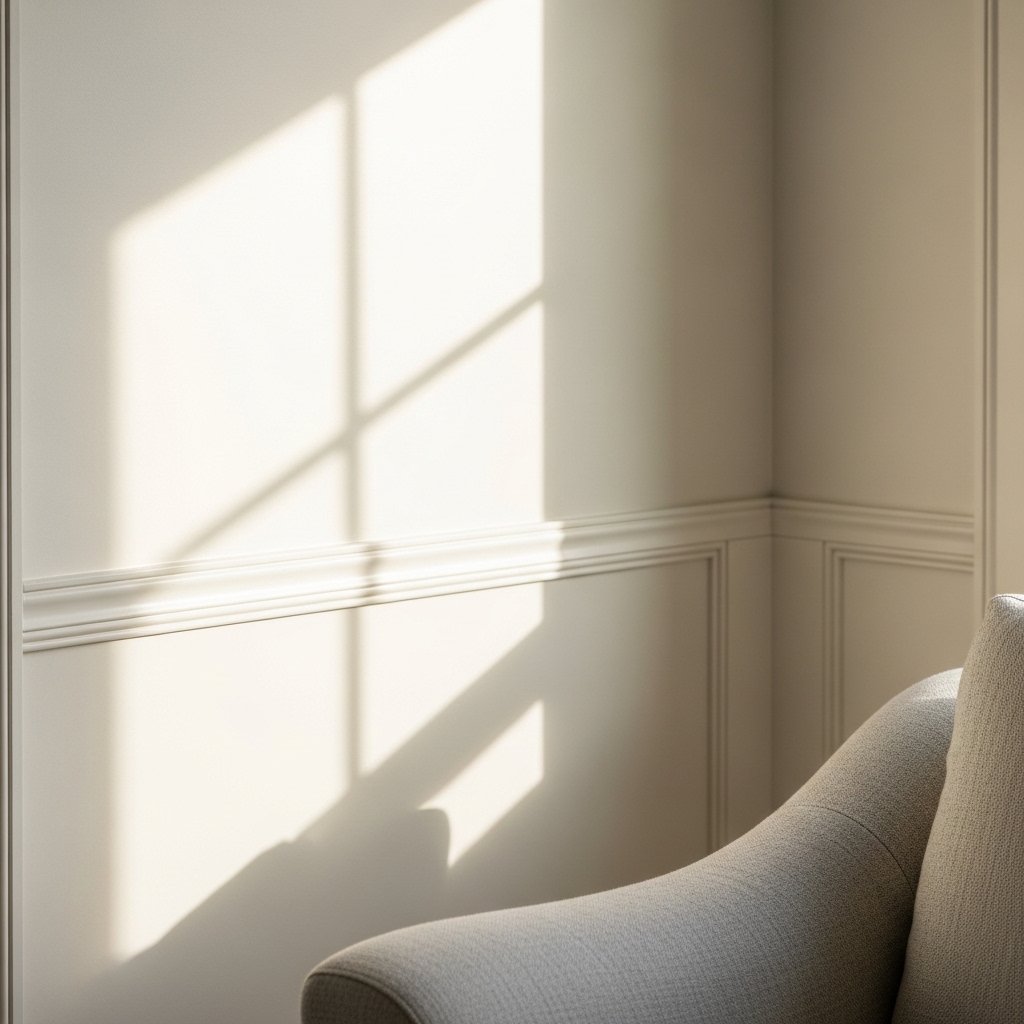
2. A Jute Rug Is the Single Best Investment You Can Make
If I had to pick one item that defines the farmhouse look more than anything else, it would be a jute rug. Not a shiplap wall, not a barn door — a jute rug.
Jute is a natural plant fiber with a warm, earthy tone that somehow works with literally everything. Light walls, dark walls, neutral furniture, colorful cushions — jute just goes. I bought a 6×9 foot jute rug for about $55 from Amazon, and it’s still going strong two years later.
The honest warning: jute is not soft underfoot. If you like padding when you walk barefoot, layer a thin cotton rug underneath. My wife pointed this out about six months after we got ours, and she was absolutely right.
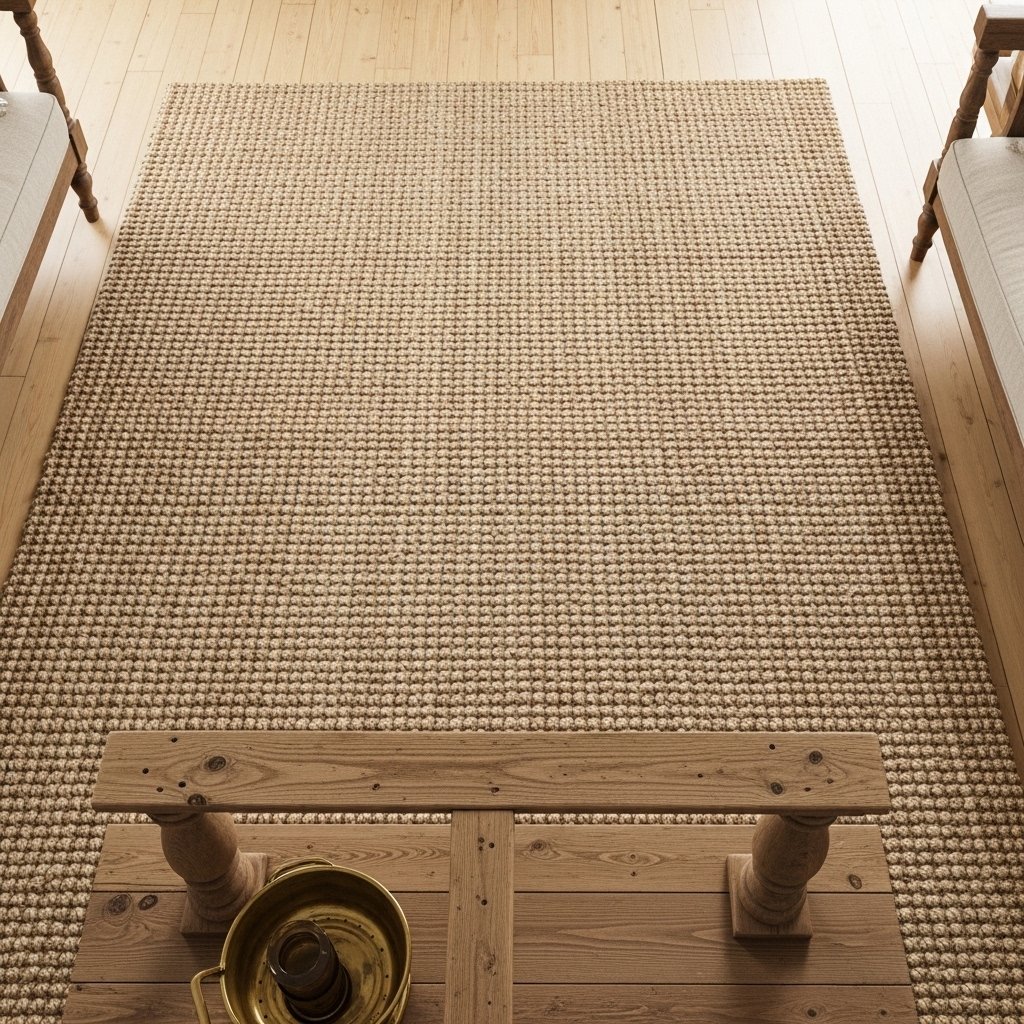
3. Embrace Imperfect Wood — The More Character, the Better
Here’s something that took me a while to understand: farmhouse style is not about new-looking furniture. It’s about furniture that looks like it has a story.
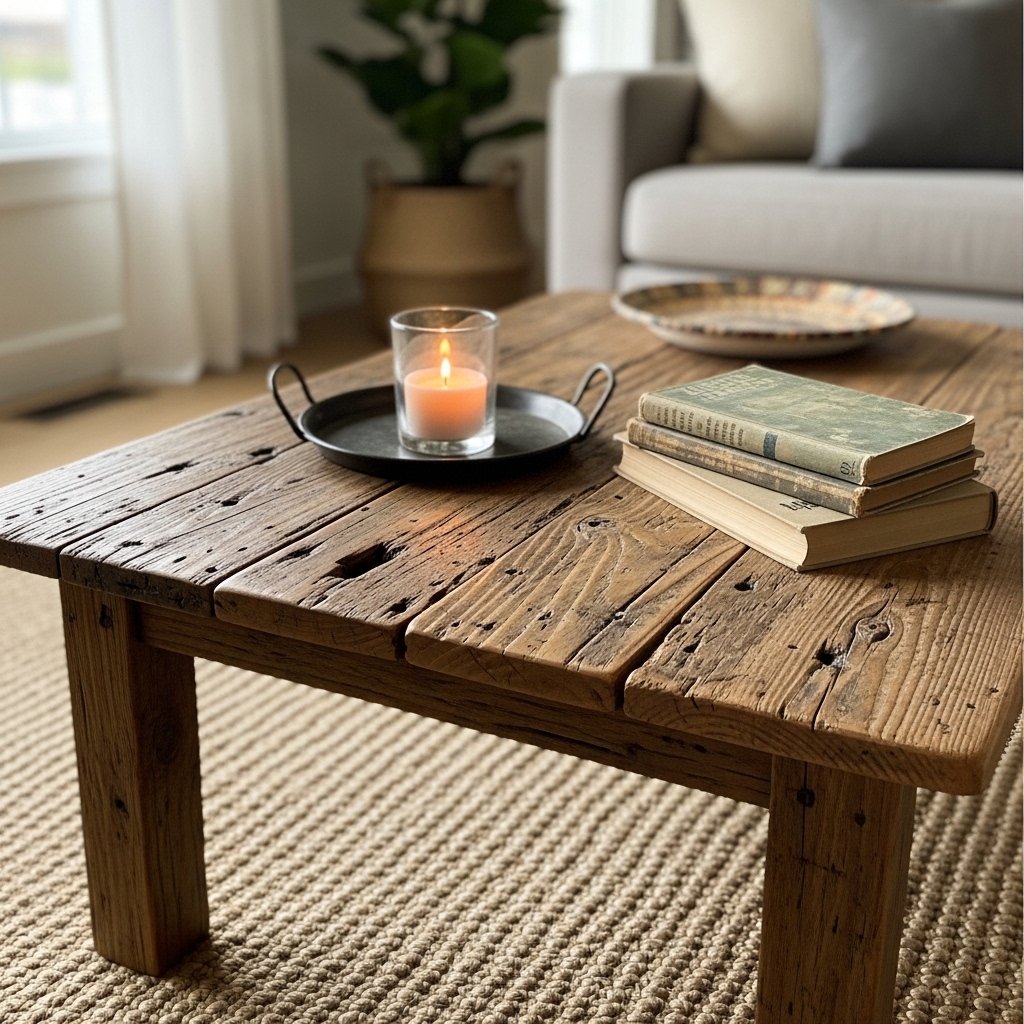
That means reclaimed wood, distressed finishes, visible knots and grain, slightly uneven surfaces. When I commissioned a coffee table from a local woodworker, I specifically asked him to keep it rough — minimal sanding, no high-gloss finish. He thought I was being cheap. The table became the most-complimented piece in my home.
Budget move: take an old piece of furniture you already own, sand it lightly, and apply a light wash or wax. Don’t try to make it perfect — you’re going for authenticity, not showroom condition. I transformed a secondhand dresser this way for under $20 in supplies.
4. Shiplap: The Iconic Element — But Do You Actually Need It?
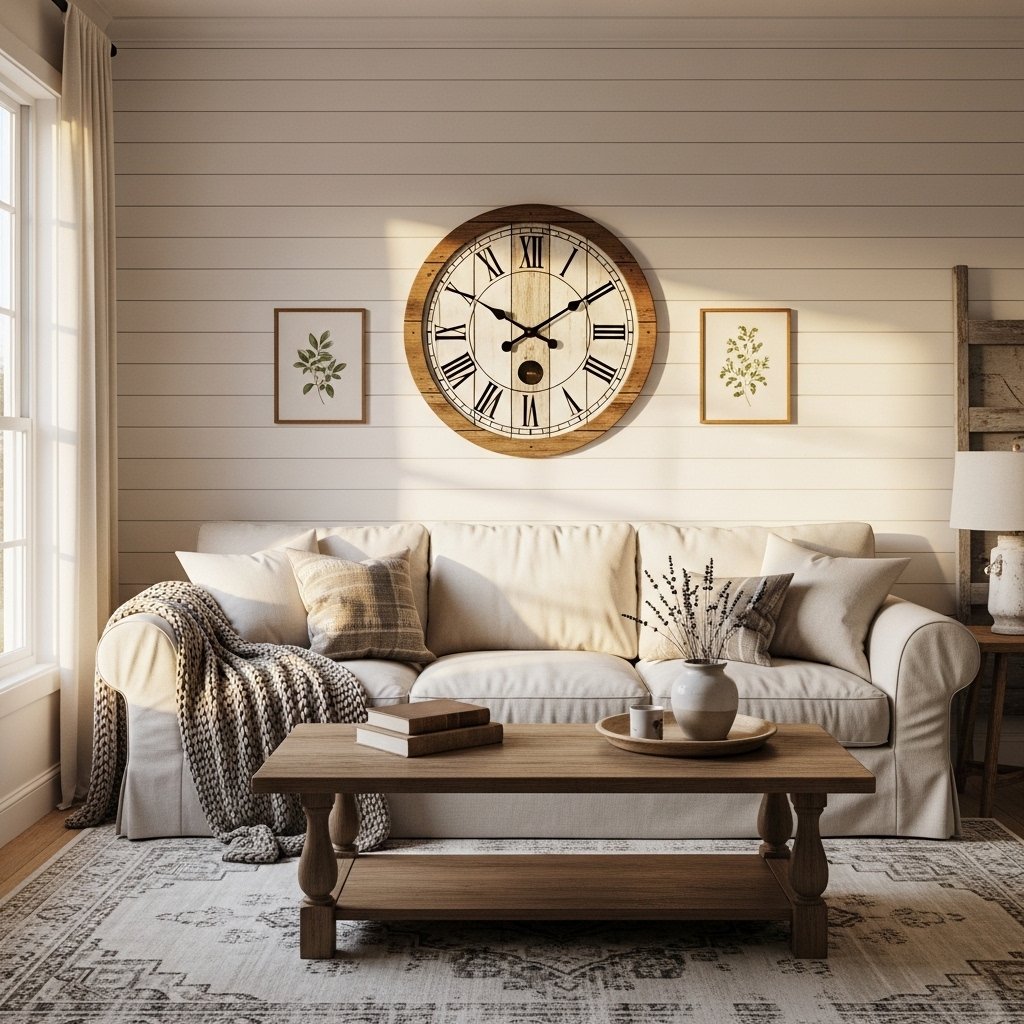
Shiplap is those horizontal wooden planks you see on every farmhouse living room photo. It’s the most visually recognizable element of the entire aesthetic. But is it worth it?
My honest answer: for renters, absolutely not. Don’t do it. For homeowners with a real budget, one shiplap accent wall — usually behind the sofa or the TV — can completely transform a space. A friend of mine had a single wall done for about $200 including labor, and it looks genuinely stunning.
For renters or budget-conscious decorators: high-quality peel-and-stick shiplap wallpaper exists and has improved enormously. It’s not permanent, it’s far cheaper, and in photos — and honestly in person — it reads very convincingly.
5. Natural Fabrics Only — Ditch the Synthetics
Farmhouse rooms breathe. They feel natural and soft because the fabrics actually are natural.
Linen, cotton, canvas, muslin — these are your materials. If you’re looking at a fabric and it’s shiny or perfectly uniform in texture, it’s probably synthetic and it probably doesn’t belong in a farmhouse room.
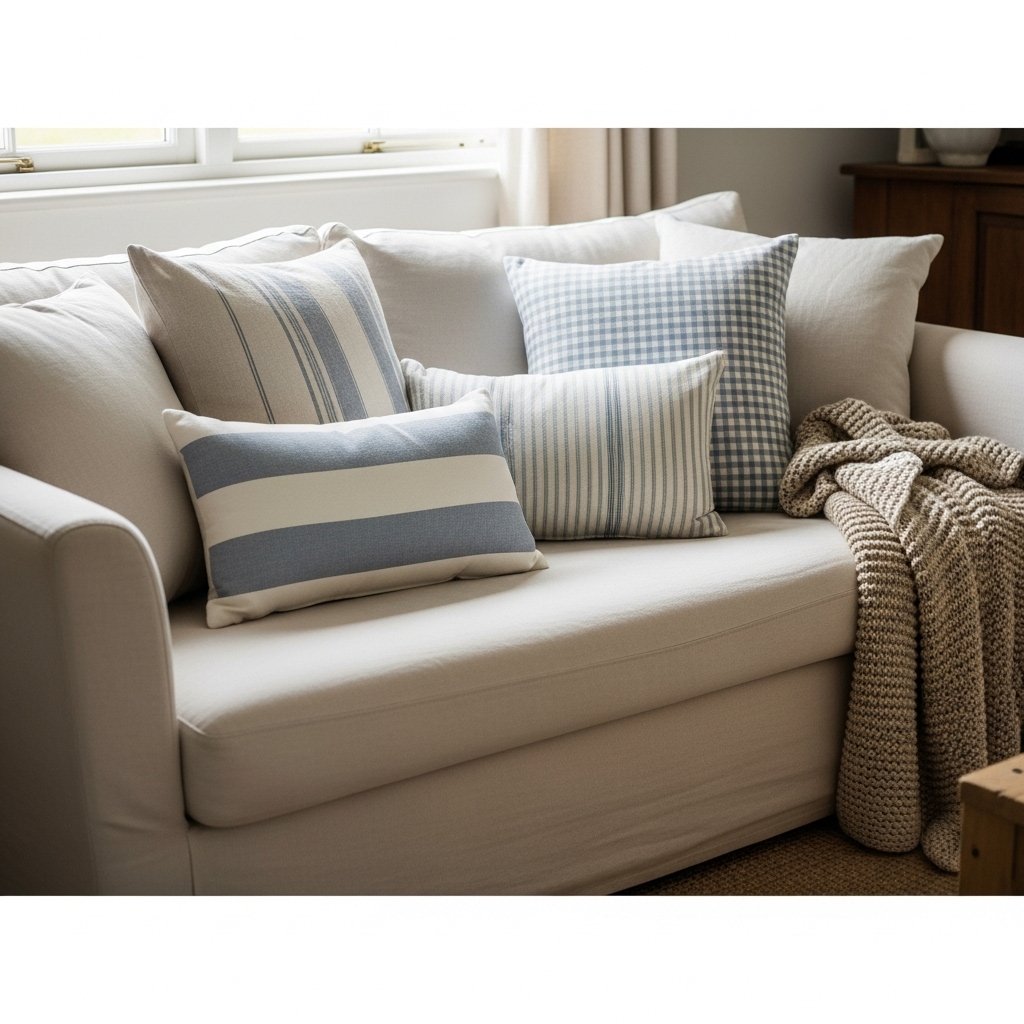
For cushion covers: mix your textures. Don’t buy a matching set. Get one striped cotton, one plain linen, one with a simple check pattern. Slightly mismatched is the goal. I once bought six matching cushion covers and the sofa looked like a hotel lobby. Mixing different textures fixed it immediately.
6. The Biggest Mistake: Overcrowding the Space
I’ve seen this happen over and over — someone discovers farmhouse decor, gets excited, and buys every rustic thing they can find. The result is a room that looks cluttered and stressful rather than calm and inviting.
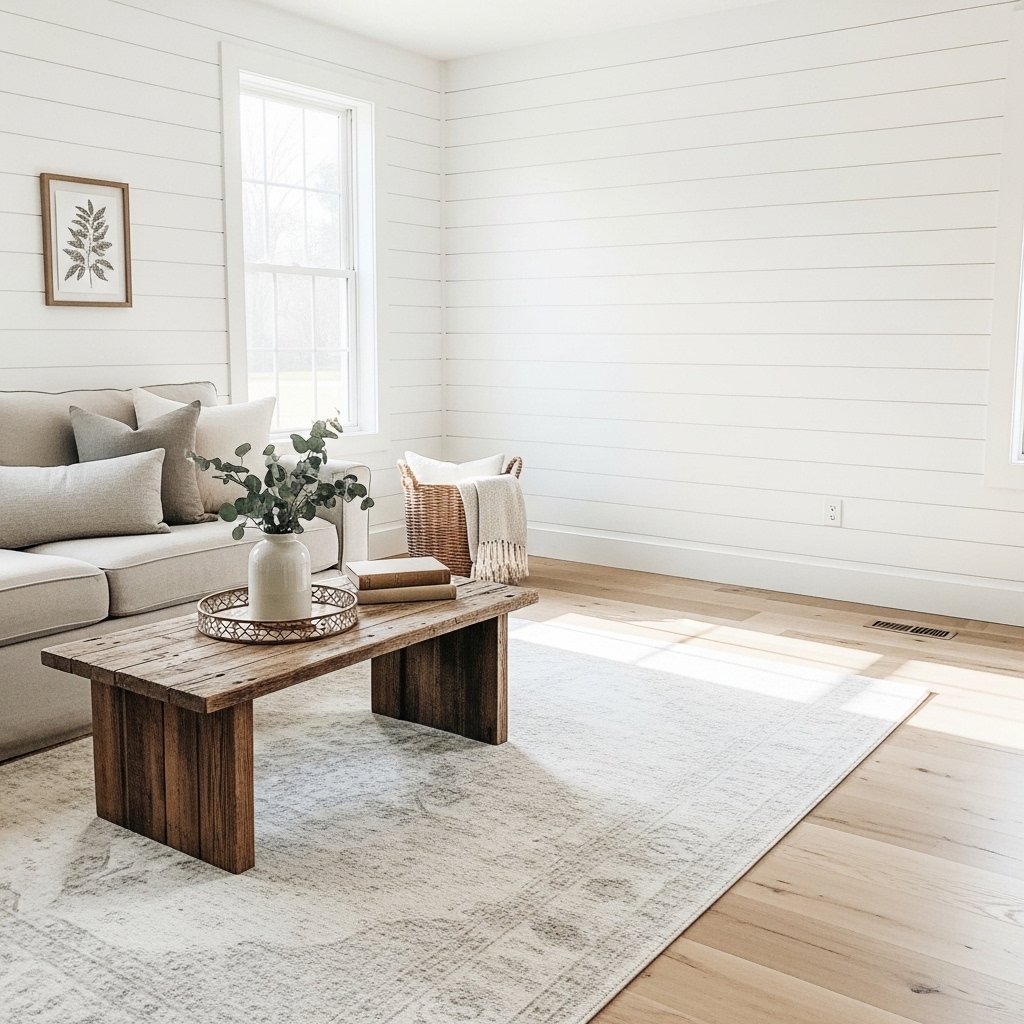
Real farmhouse rooms have breathing space. This isn’t minimalism — you can absolutely have personality and plenty of pieces. But every item should be there for a reason.
My personal rule: if something is neither functional nor genuinely beautiful to me, it doesn’t get shelf space. Decorating to fill gaps is how rooms go wrong.
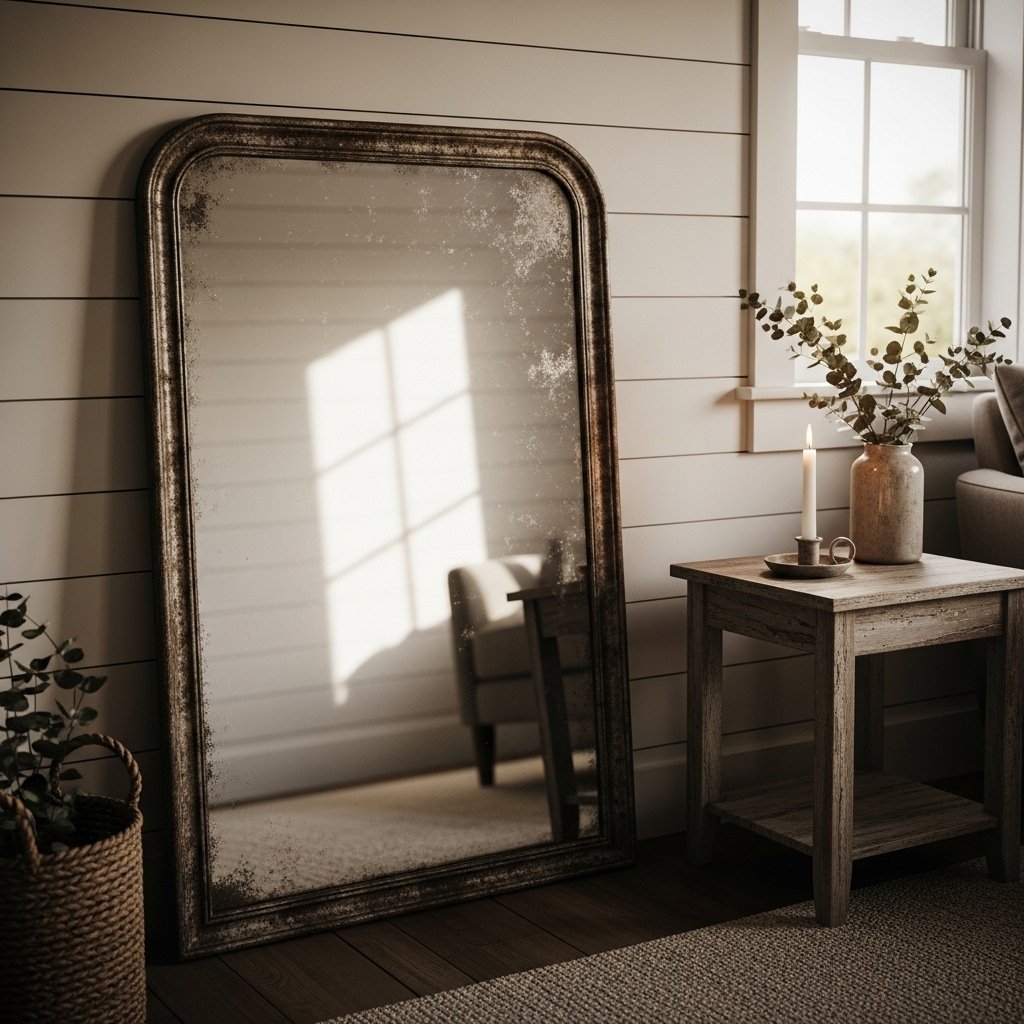
7. Vintage Mirrors: The Underrated Secret Weapon
A vintage mirror with a worn, ornate frame does three things at once: it bounces light around the room, it makes the space feel larger, and it adds that sense of history that farmhouse style depends on.
You don’t need to spend a lot. Thrift stores, estate sales, and secondhand apps are full of old mirrors that people are practically giving away. I found a beautiful ornate mirror at a thrift store for $18. A little light distressing with sandpaper on the frame, and it looks like something from a French farmhouse.
8. Plants — But the Right Ones
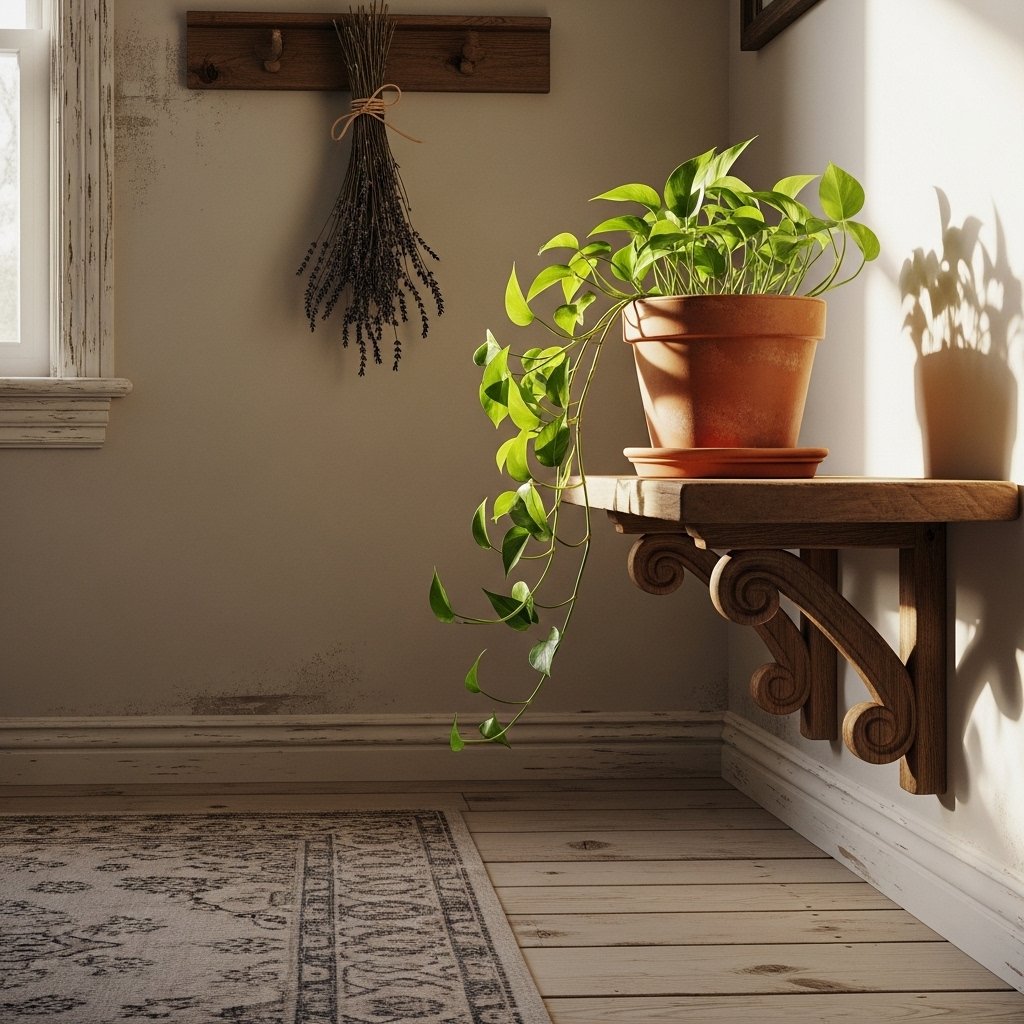
Not every plant fits the farmhouse aesthetic. Succulents read too modern. Fiddle leaf figs feel a bit too trendy — personal opinion, I’ll stand by it.
What works: pothos with trailing vines, eucalyptus (fresh or dried), simple wildflower-style arrangements in mason jars, and dried lavender bundles. The containers matter just as much as the plants themselves. Think terracotta pots, galvanized metal buckets, wicker baskets. Fancy ceramic planters in bold colors will look out of place.
9. Lighting: Spend Money Here, Save Everywhere Else
If your budget is limited, I’ll tell you exactly where to prioritize: lighting. The right light fixture does more for a room’s atmosphere than almost anything else you can buy.
For farmhouse style: Edison bulb pendants, lantern-style fixtures, or simple matte black or oil-rubbed bronze fixtures. Always use warm white LED bulbs. Cool white light makes a farmhouse room feel like a convenience store. It kills the entire vibe.
And if you can swing it: install a dimmer switch. An evening in a farmhouse room with lights dimmed low is genuinely magical. That single $15 dimmer switch might be the best value improvement in this entire list.
10. Wicker and Rattan: Not a Trend, a Timeless Choice
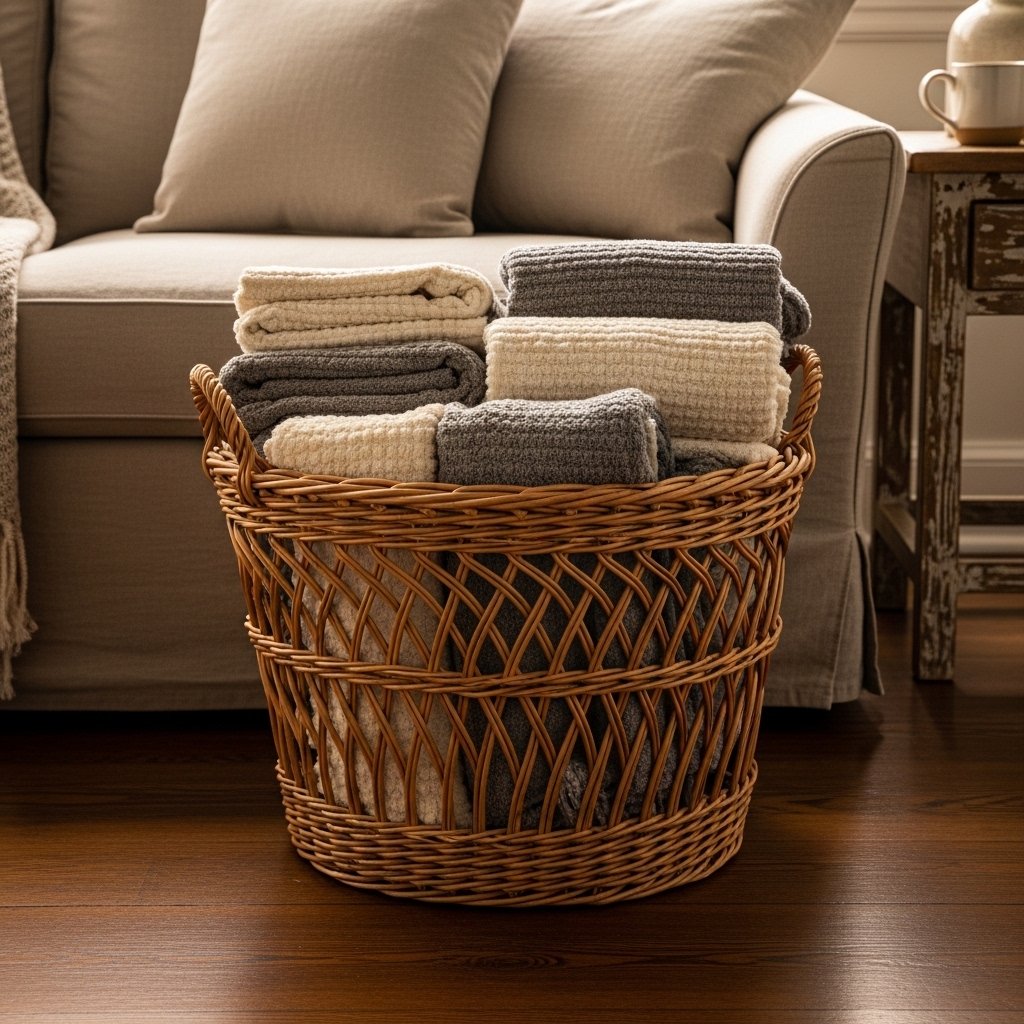
Wicker baskets, rattan trays, seagrass storage boxes — these are farmhouse essentials that also happen to be genuinely useful. Storage that looks good while doing its job is one of the core principles of farmhouse design.
Use a large wicker basket for throw blankets. A rattan tray corrals remotes and small items on the coffee table. A seagrass basket holds current magazines or books. You’re solving a real organizational problem and adding to the aesthetic at the same time. That’s good design.
11. Fireplace — Real or Faux, Both Work
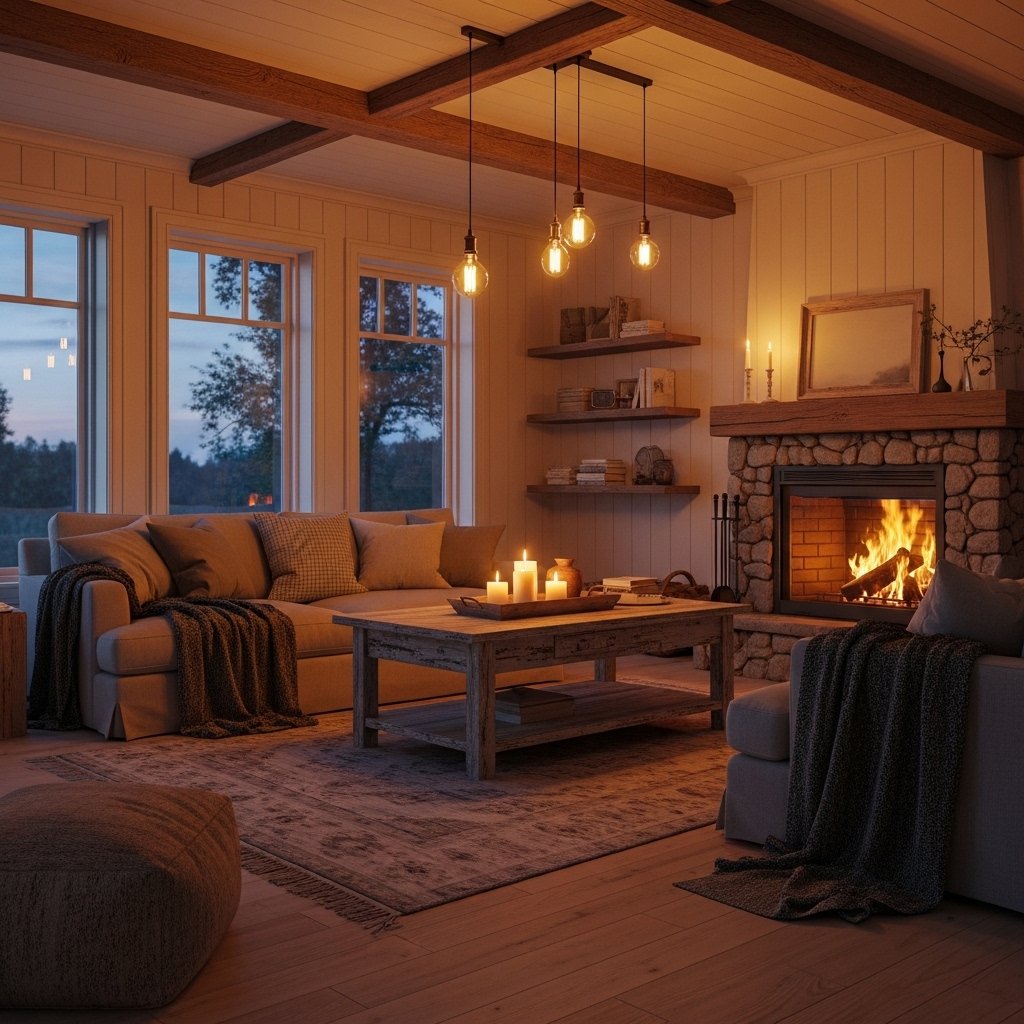
A fireplace is the heart of a farmhouse living room. But if you don’t have one — and most of us don’t — you can fake it convincingly.
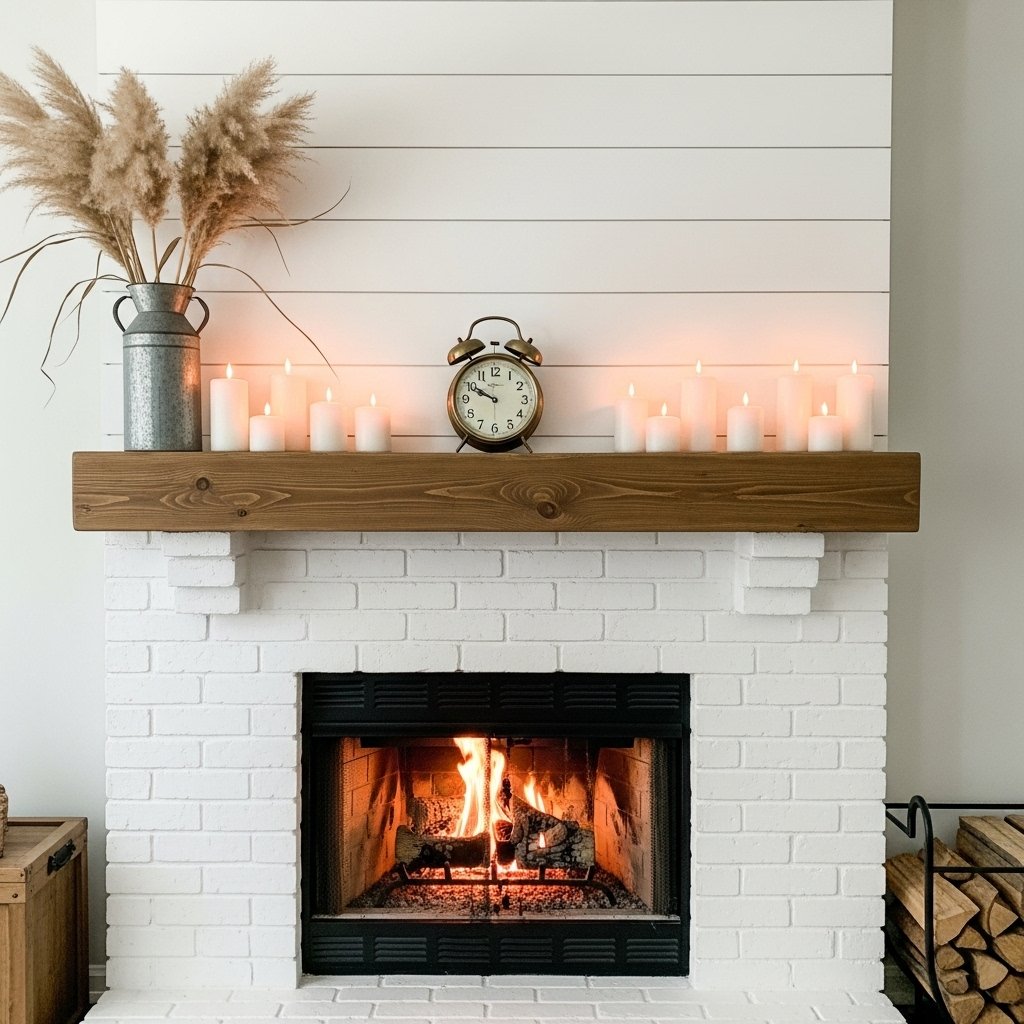
An electric fireplace insert placed into a simple mantel surround looks remarkably real. And even just a well-styled mantel shelf — without any fireplace beneath it — becomes a natural focal point. I had a carpenter build a simple MDF mantel frame, painted it white, and styled it with candles, a vintage clock, and some dried botanicals. Total cost: around $90. Everyone assumes it’s original to the house.
12. Gallery Wall — Done the Farmhouse Way
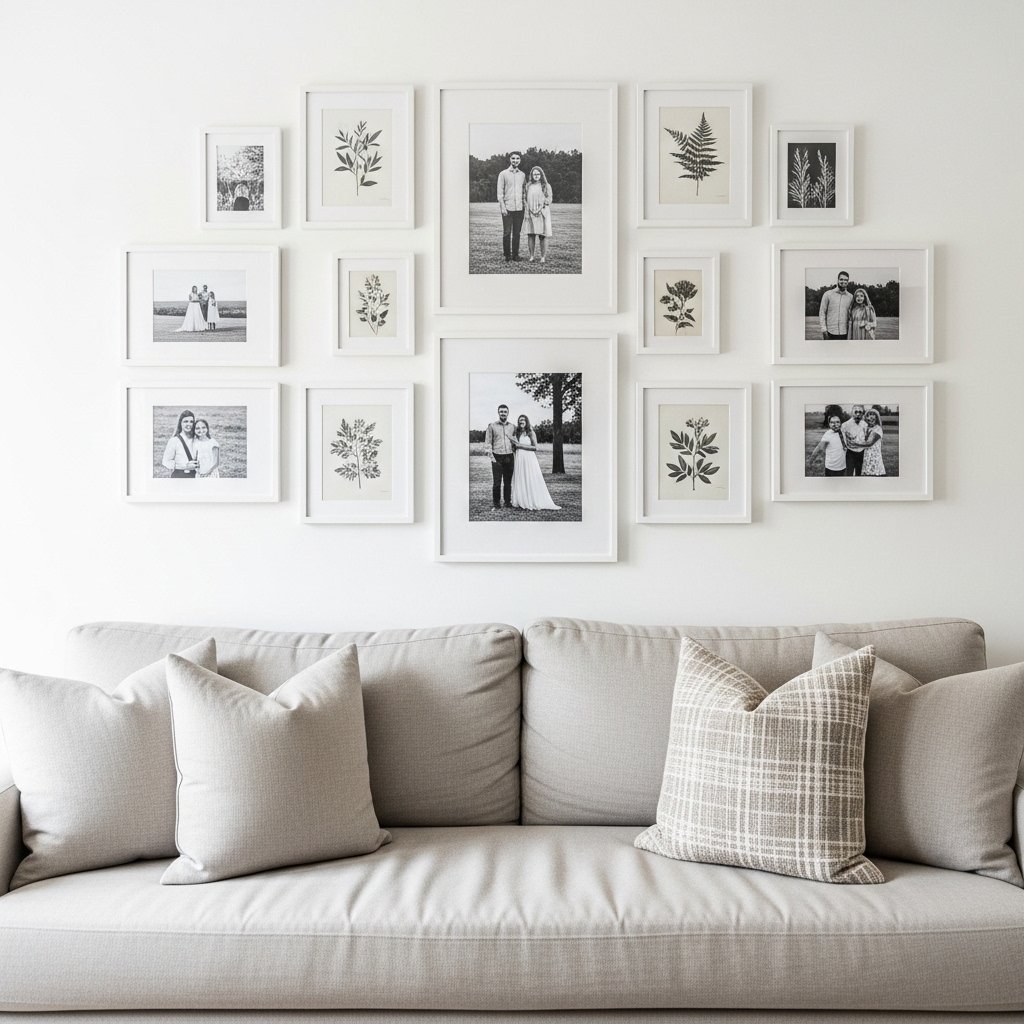
A gallery wall can go wrong fast if it’s not cohesive. The farmhouse approach: keep the frames consistent in finish — all white or all natural wood — but vary the sizes. Mix family black-and-white photos with simple botanical prints, vintage maps, and minimal text-based art.
Before you put a single nail in the wall: lay all the frames on the floor exactly as you want them arranged, photograph it, then use that photo as your guide when hanging. My wife did our gallery wall with eleven frames of different sizes — some family photos, some free botanical prints we downloaded and printed ourselves — and the total cost was under $60.
13. Coffee Table Styling — The Art of Restraint
This is where a lot of people go wrong. They see Pinterest coffee tables with fifteen carefully curated objects and try to replicate that exact density. Don’t.
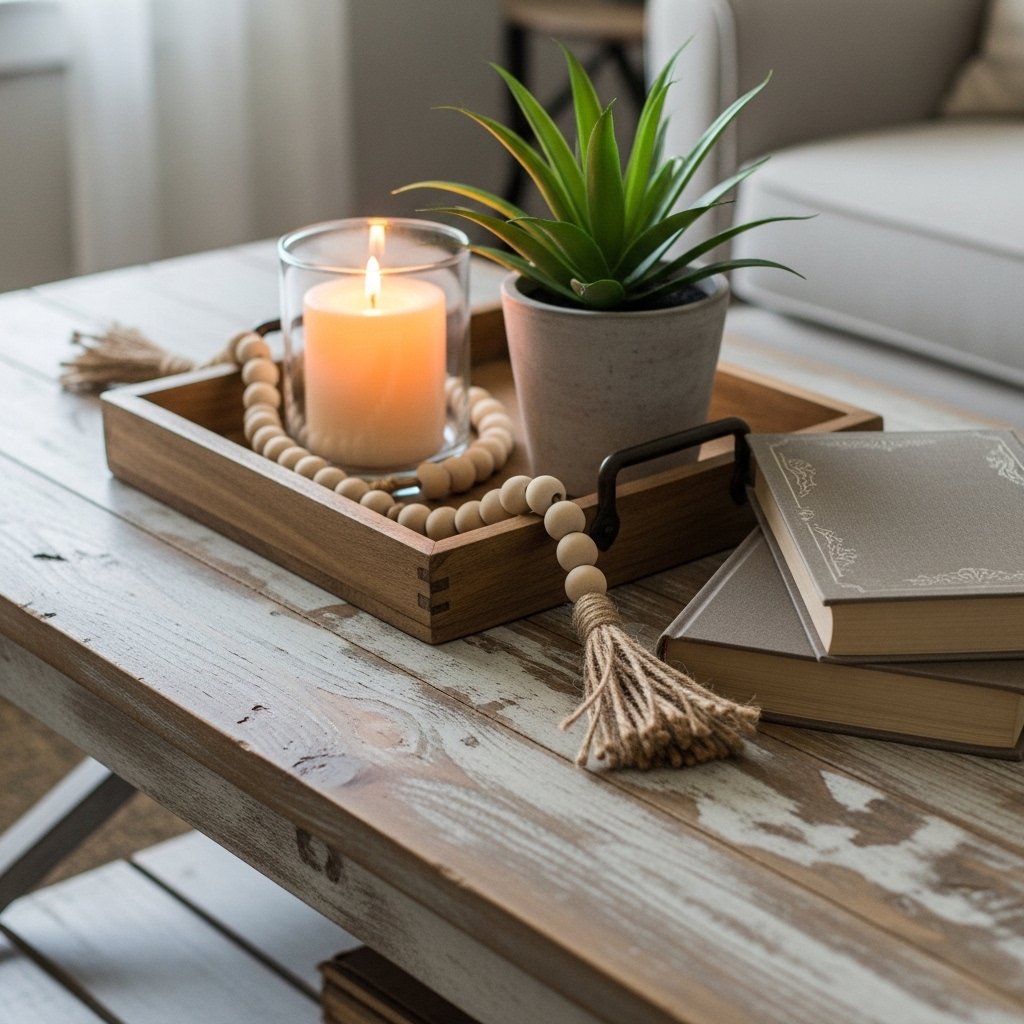
The formula that works: one tray (wood or metal), a candle, a small plant or dried arrangement, one decorative object, a stack of two or three books. That’s it. Five or six items maximum, and half of them grouped inside the tray.
I once styled my coffee table with twelve objects in what I convinced myself was an artful arrangement. My sister visited and politely asked if I was planning to have a garage sale. She wasn’t wrong.
14. Curtains — Floor Length, No Exceptions
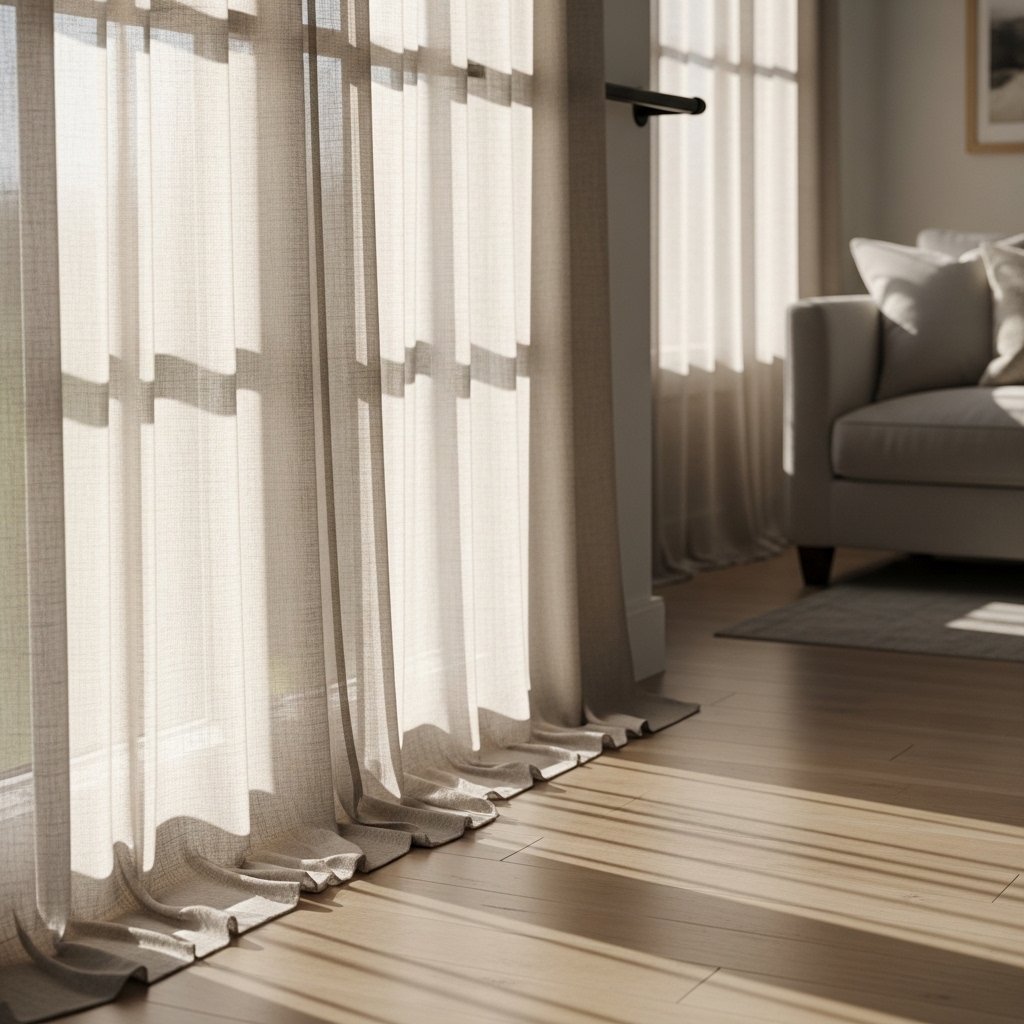
Short curtains in a farmhouse room look wrong in a way that’s hard to articulate but immediately obvious. Floor-length curtains — ideally slightly pooling on the floor — are non-negotiable for this aesthetic.
Material: linen or light cotton, in a soft neutral. Sheer or semi-sheer lets in natural light, which is important. Heavy blackout curtains make a farmhouse room feel formal and closed-off, which is the opposite of what you want.
Curtain rod: keep it simple. Matte black or oil-rubbed bronze, plain finials. Ornate, embellished curtain rods do not belong here.
15. The Slipcovered Sofa: Farmhouse’s Best-Kept Secret
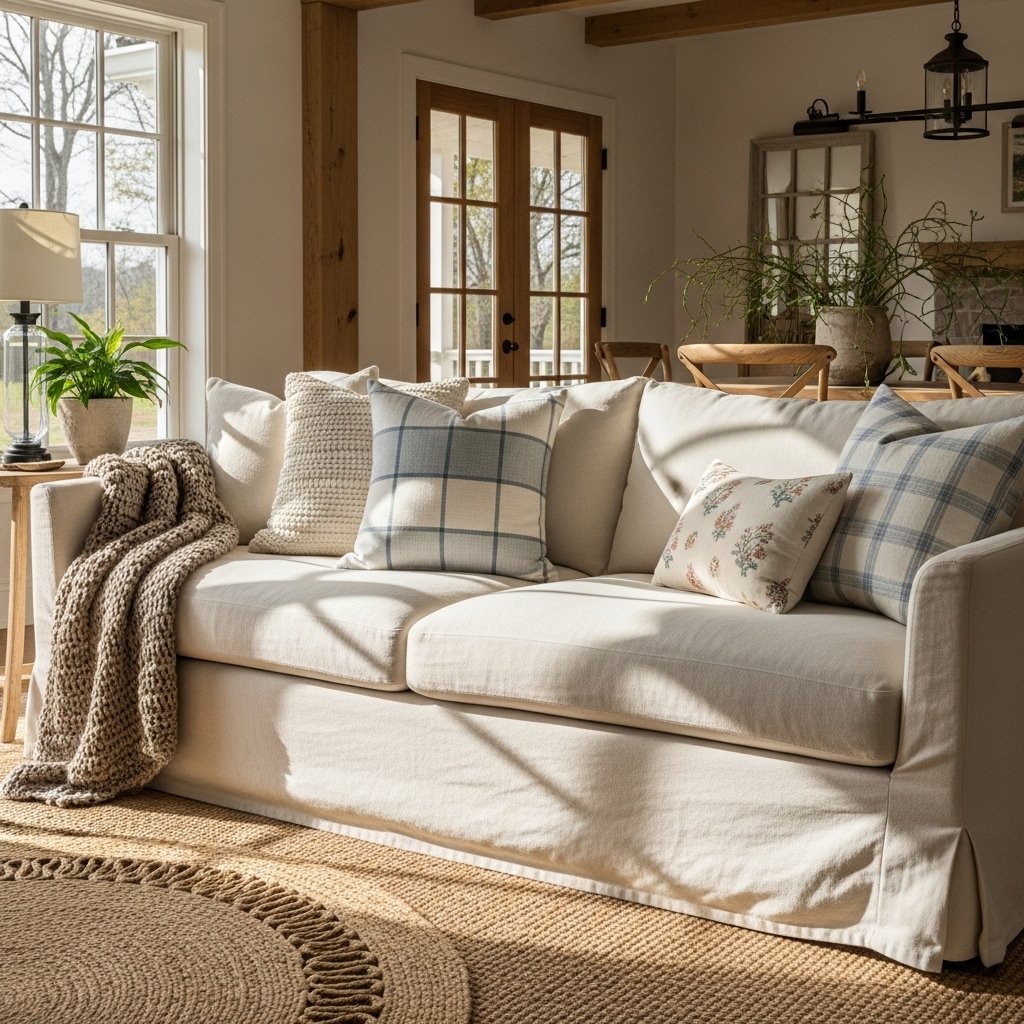
The ideal farmhouse sofa has a slipcover — a removable, washable fabric cover — in a light neutral tone. Cream, warm white, or soft grey. Linen or linen-blend fabric if your budget allows.
Why slipcovers specifically? Because they’re washable. I have kids. Having a sofa cover I can throw in the washing machine and return to pristine condition is not just a style choice — it’s a survival strategy. The sofa always looks fresh.
If you can’t afford a new sofa, buy a quality slipcover for your existing one. Several brands make them in standard sofa sizes and they fit surprisingly well.
16. Candles — More Than You Think You Need
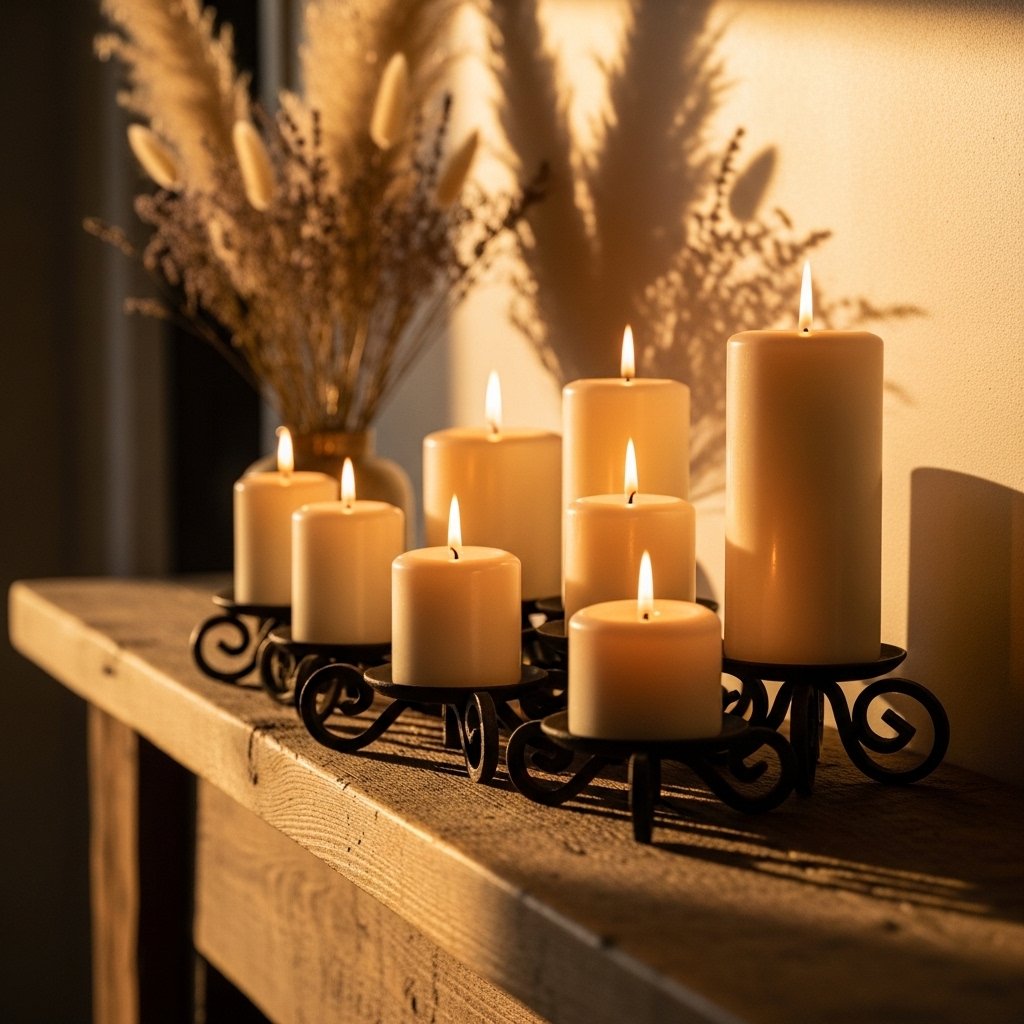
Farmhouse rooms run on candlelight. Pillar candles in varying heights, taper candles in simple iron holders, candles tucked into lanterns on the floor. Even unlit, they add visual warmth and texture.
For scent: warm, natural fragrances work best — vanilla, cedarwood, clean cotton, beeswax, or apple and cinnamon in cooler months. Avoid heavily synthetic or floral fragrances. They clash with the earthy, grounded feeling farmhouse rooms aim for.
For holders: iron, aged brass, natural wood, galvanized metal. Skip the modern chrome or acrylic holders entirely.
17. Faux Wood Ceiling Beams — More Convincing Than You’d Expect
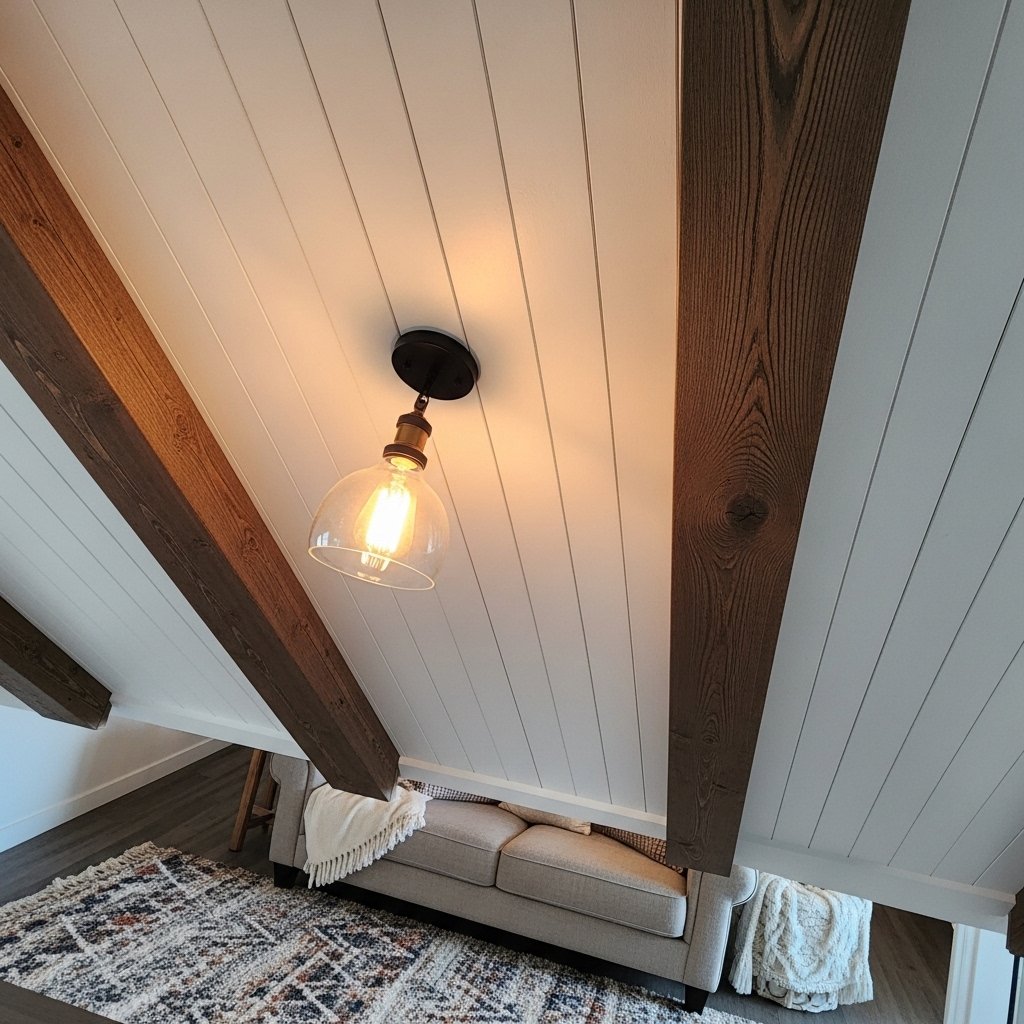
Exposed wooden ceiling beams are a farmhouse signature. Real structural beams are expensive and require serious renovation work. But faux beams — made from lightweight foam or hollow MDF — are surprisingly convincing and much more accessible.
They’re available from several manufacturers, paint to match real wood tones, and can be installed without major construction. I’ve been in rooms with faux beams where even repeat visitors don’t realize they’re not original to the house. As long as you don’t announce it, nobody knows.
18. Black Accents — The Secret That Ties Everything Together
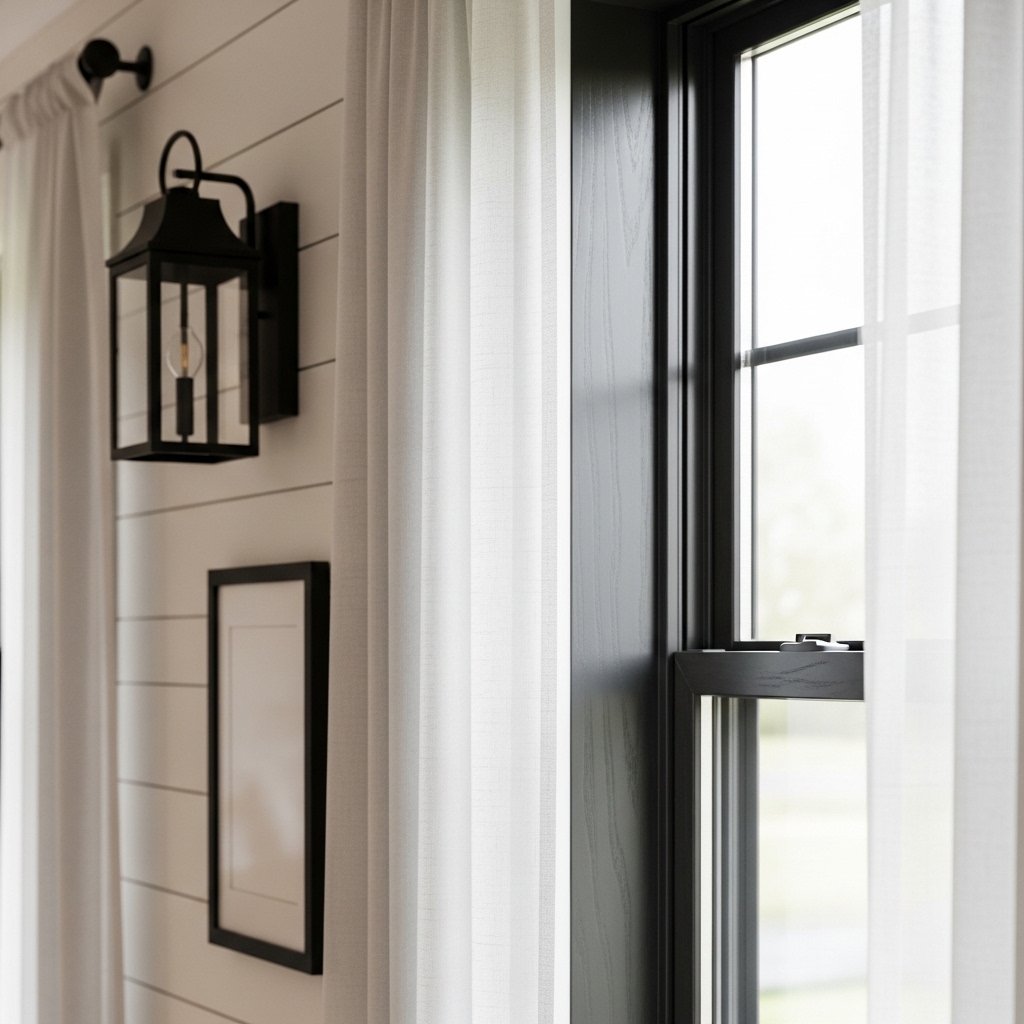
Here’s one I figured out late in the process: purely neutral farmhouse rooms can start to feel flat and undefined. The thing that grounds everything and gives the room visual structure is matte black accents.
Black window frames, black light fixtures, black picture frames, black cabinet hardware. These dark anchor points stop the room from floating away into a beige blur. When I swapped my lamp shades for matte black ones and replaced my cabinet pulls with black hardware, the room suddenly felt intentional and complete in a way it hadn’t before.
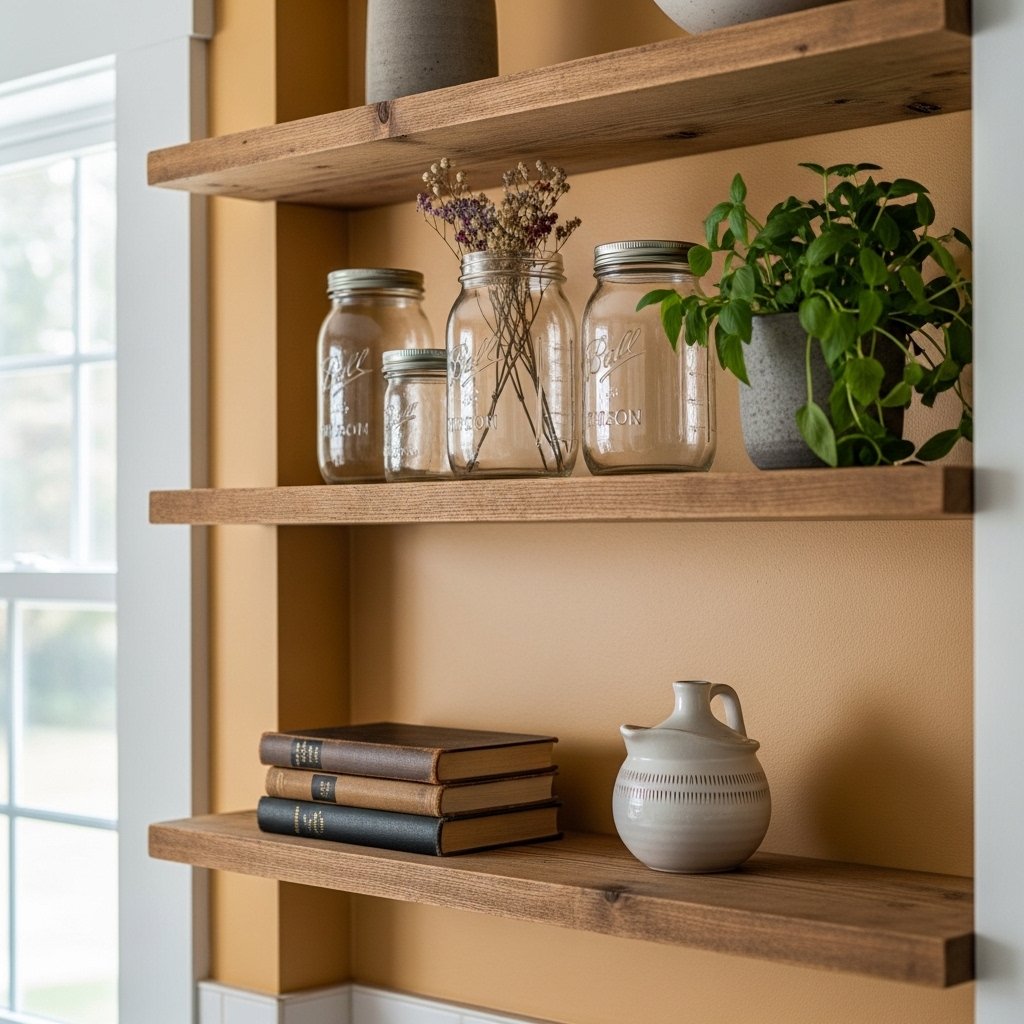
19. Open Shelving — Beautiful, But Be Honest With Yourself
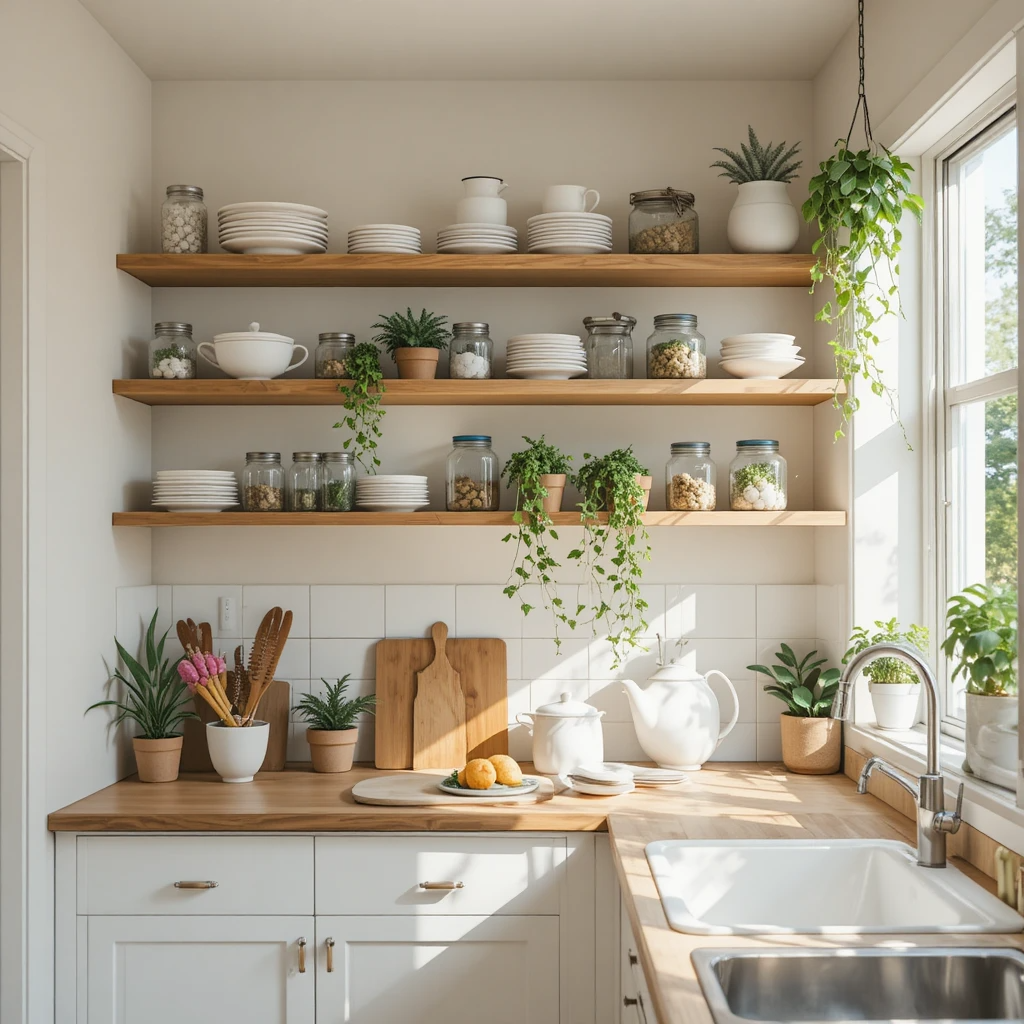
Open wooden shelves styled with mason jars, books, small plants, and vintage finds look absolutely stunning. They’re also dust magnets that require constant maintenance to keep looking like the Pinterest photos.
My honest advice: if you have young children, either skip open shelves or mount them high enough to be out of reach. If you’re a naturally tidy person who enjoys styling and restyling, they’re a wonderful feature. If you’re not — and most of us aren’t — closed storage is probably a better long-term investment.
20. Throw Blankets — You Cannot Have Too Many
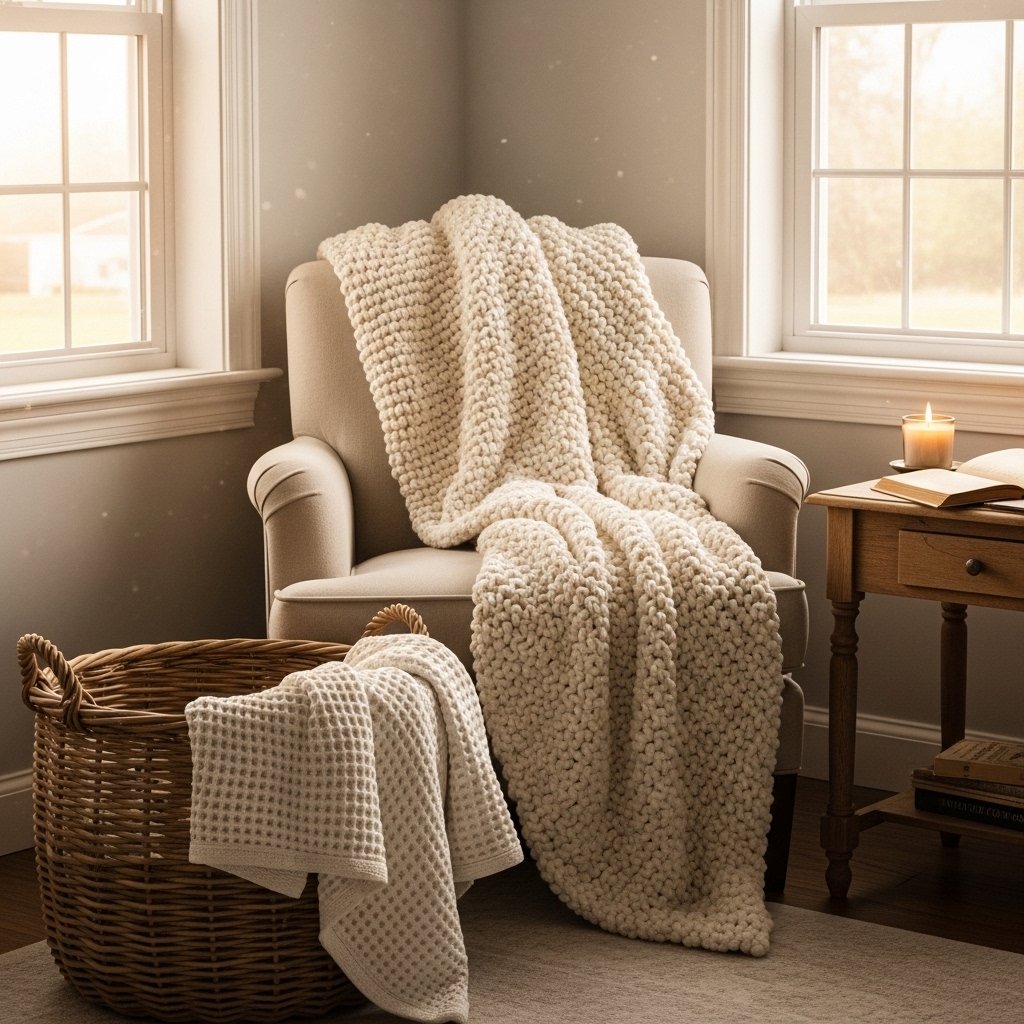
Throws are possibly the single item most responsible for making a farmhouse room feel cozy rather than just stylish. One on the sofa, one on the armchair, one in a basket on the floor.
Chunky cable-knit throws, waffle-weave cotton, simple cotton muslin — all work beautifully. What to avoid: faux fur (too glam), anything shiny or synthetic, and perfectly matching sets. The throws should feel like they’ve been collected over time, not purchased as a coordinated bundle.
21. Mix Old and New Without Apology
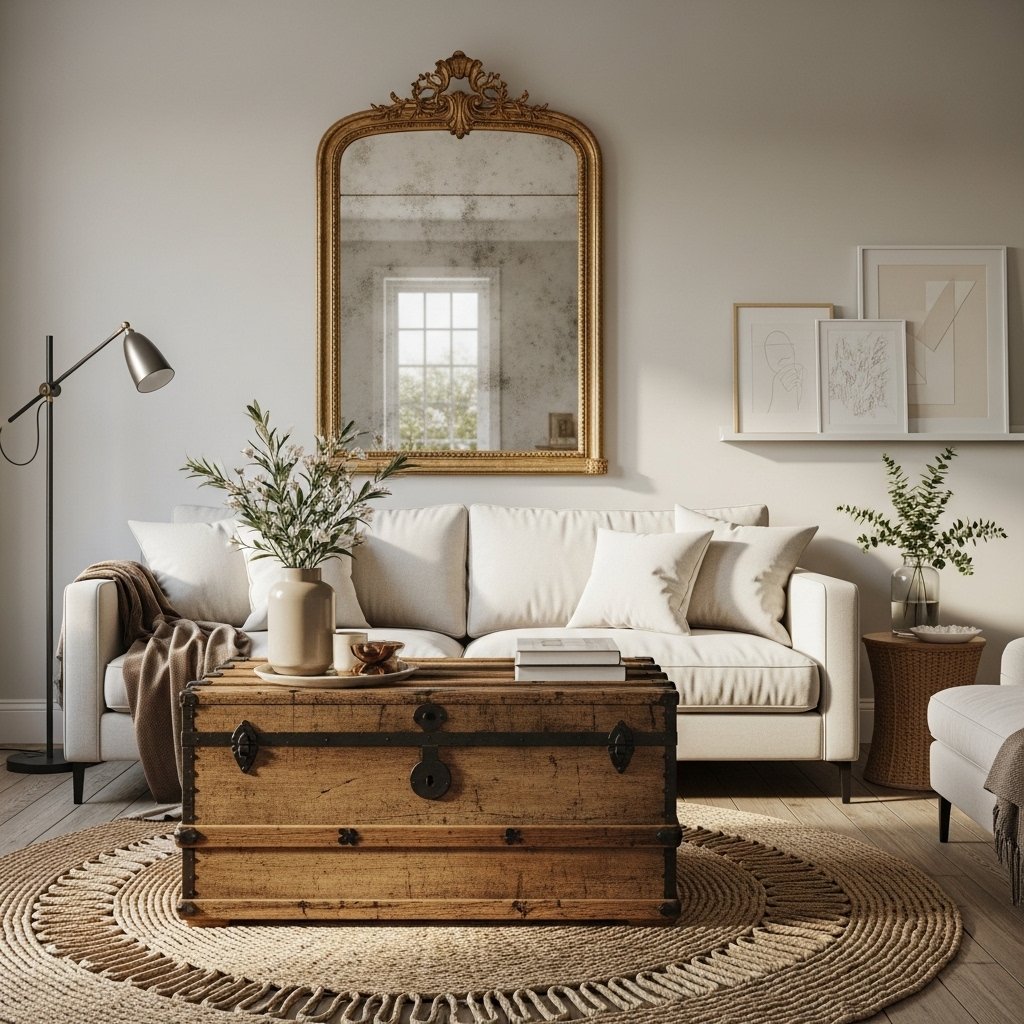
One of the most common misconceptions about farmhouse style is that everything has to be antique or vintage. It doesn’t. The aesthetic is actually built on mixing — genuinely old pieces alongside newer items that simply have the right look and feel.
Your grandmother’s quilt alongside a new linen sofa. A vintage mirror above a modern lamp. An old wooden crate used as a side table next to a brand new wicker basket. The mix is the point. Farmhouse rooms that look entirely “old” often feel staged. The mix makes a room look lived-in and real.
22. The Most Important Idea: Make It Actually Yours
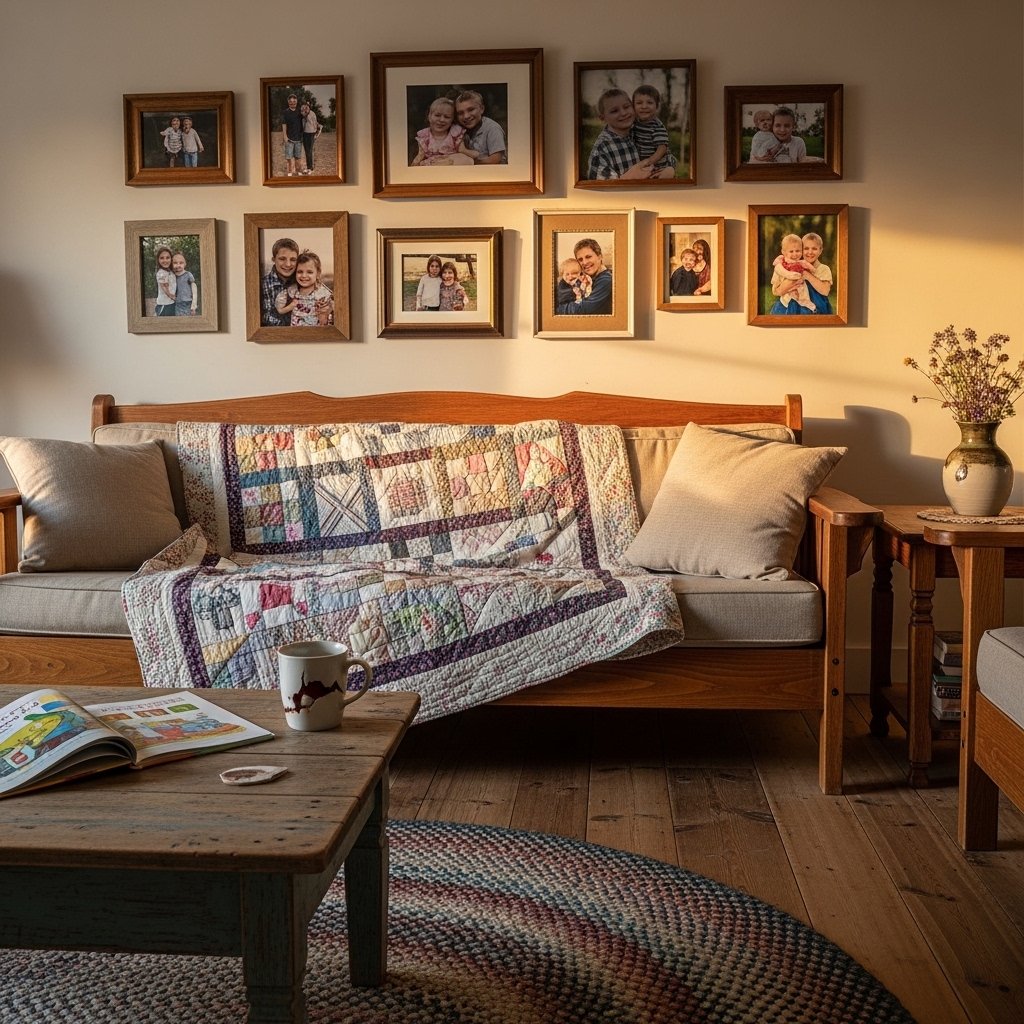
Here’s the thing about all those perfectly styled farmhouse photos on Pinterest and Instagram: they’re staged for photography. No one actually lives in a room that looks like that. The items are placed just so, the lighting is perfect, and there are no toys on the floor, no half-read books left spine-up, no evidence of real daily life.
Real farmhouse aesthetic — the kind that feels genuinely warm and welcoming rather than just pretty — includes your actual life. Your family’s photos, not just generic black-and-white prints. Your grandmother’s worn quilt. The pottery piece you bought at a craft fair because you loved it, not because it matched anything. The books you actually read, not just decorative hardcovers with beautiful spines.
Those personal imperfections and authentic details are what make a farmhouse room feel like a home rather than a showroom. A slightly scratched table, a faded cushion, a handmade object that’s not quite symmetrical — these things add character. Don’t smooth them out.
Realistic Budget Breakdown
If you’re starting from scratch, here’s an honest look at what a farmhouse living room transformation might cost:
- Basic refresh (paint, jute rug, candles, accessories): $150 – $400
- Mid-level makeover (above + curtains, lighting upgrade, new cushions or slipcover): $400 – $900
- Full transformation (new sofa, shiplap wall, built-in shelving, quality lighting): $1,500 and up
The good news: farmhouse is one of the most thrift-friendly interior styles there is. Secondhand stores, estate sales, and online marketplaces can dramatically lower any of these numbers. My own living room transformation came in around $350 total — a combination of secondhand finds, two DIY projects, and a handful of targeted new purchases.
And the result? It’s the room where my family spends most of our time. Which, in the end, is what good home design should produce — not a room that looks impressive, but a room that actually gets used and loved.
That’s the whole point of farmhouse style.


Recent Comments