
21 Spring Kitchen Decor Ideas for a Fresh Cooking Space
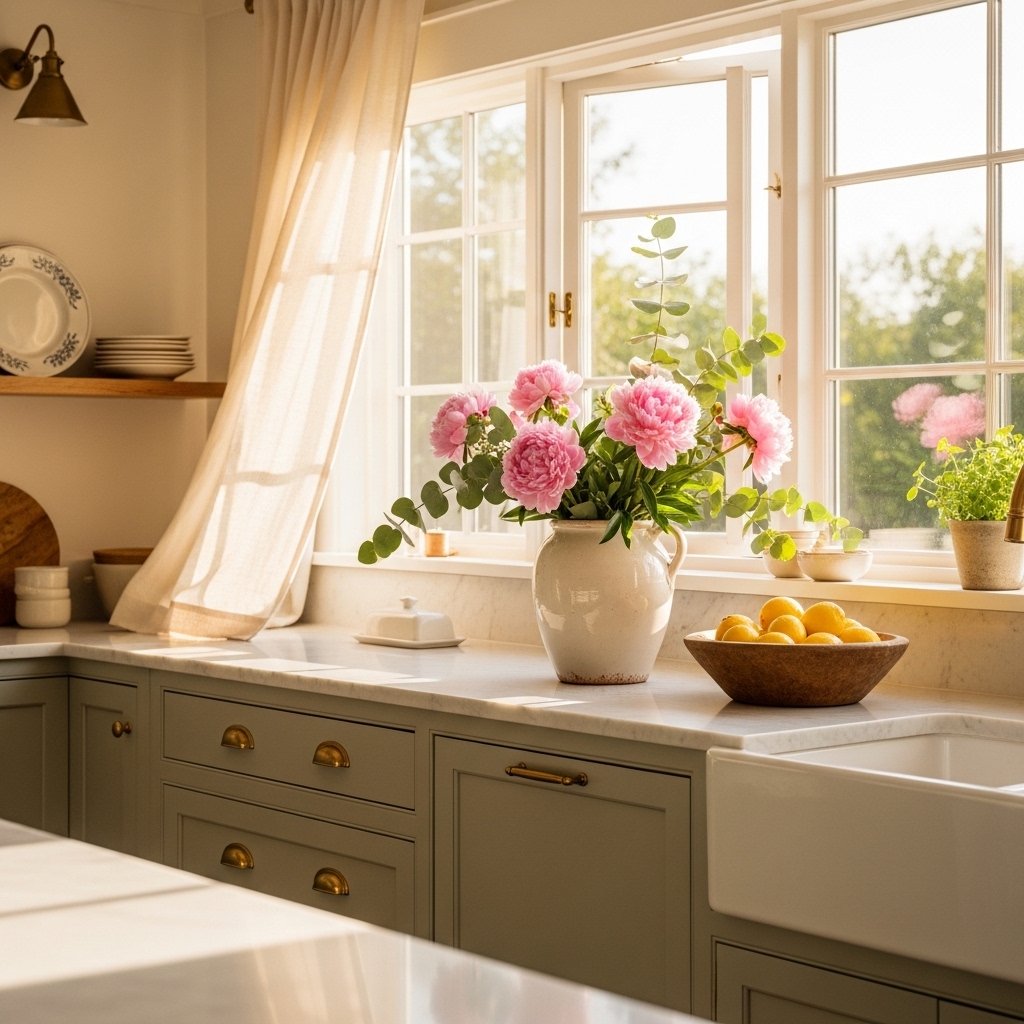
Spring is one of those magical seasons that changes everything — the light softens, the air smells different, and something deep inside you wants to open every window and start fresh. Your kitchen, the most used and most loved room in your home, deserves to feel that shift too. The good news is that you do not need to renovate, repaint, or spend a fortune to make your kitchen feel genuinely new. A few thoughtful, seasonal touches — the right colors, the right textures, the right plants — are all it takes to completely transform the energy of your cooking space. This guide walks you through 21 spring kitchen decor ideas that are visual, inspiring, easy to try, and perfect to pin and share. Each one comes with real styling advice and image prompts so you can bring the vision to life. Let us begin.
1
Bring in Fresh Seasonal Flowers and Make Them a True Centerpiece
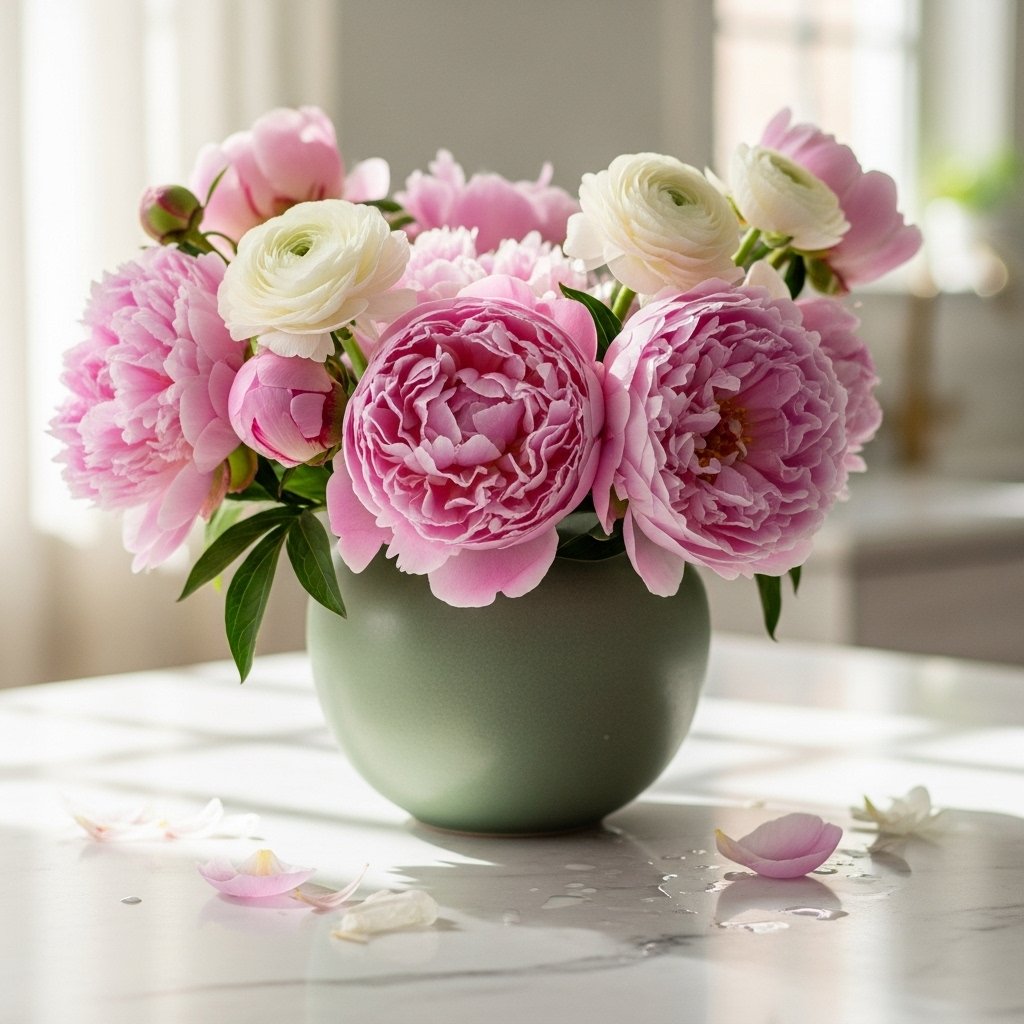
There is no faster, more powerful way to transform a kitchen for spring than bringing in a bunch of fresh flowers. The moment you set a vase of tulips, ranunculus, peonies, or daffodils on the counter, the whole room changes. The color, the scent, the visual softness — it is instant magic. And the best part is that you do not need an elaborate floral arrangement or expensive blooms. A simple, loose bunch of grocery store flowers placed in a ceramic vase or even a clean jam jar is enough to create something genuinely beautiful.
When choosing spring flowers for your kitchen, think about the overall palette you are working with. If your kitchen has white or neutral tones, go for bold pinks, coral, or sunny yellow — the contrast is stunning. If your kitchen leans warm and earthy, choose softer blooms in cream, blush, or peachy apricot. For a kitchen with dark cabinetry, pure white flowers with lots of greenery create a striking, editorial look that photographs incredibly well.
Do not underestimate the importance of the vessel either. A handmade ceramic vase in sage green or terracotta elevates even the simplest bunch of flowers into something that looks intentional and styled. Vintage pitchers, stoneware crocks, and simple glass bottles all work beautifully. Change your flowers every one to two weeks as spring progresses — starting with tulips and daffodils in early spring, moving into peonies and ranunculus as the season warms up. This keeps your kitchen feeling alive and ever-changing.
💡 Tip: Grocery store flowers are fresh, beautiful, and cost almost nothing. You do not need a florist.
2
Replace Your Kitchen Towels With Soft Spring Linen
This is one of the simplest, most satisfying spring kitchen refreshes you can make — and it costs almost nothing. Swapping your everyday kitchen towels for a fresh set of soft linen ones in spring-appropriate colors completely changes the feel of your cooking space. Linen kitchen towels in sage green, dusty rose, butter yellow, soft sky blue, or warm cream instantly give your kitchen that effortlessly beautiful, slightly European, lived-in quality that performs so well on Pinterest and in home decor inspiration feeds.
The reason linen works so beautifully is because of its texture. Unlike cotton terry towels, which look flat and functional, linen has a natural slub texture that catches light, drapes elegantly, and gets softer and more beautiful with every wash. Drape one over your oven handle. Fold two neatly on the counter next to the sink. Hang one casually from a cabinet knob. Each placement creates a different, lovely visual.
When shopping for spring linen towels, look for natural dyes and woven stripes — these tend to feel most authentic and photograph best. Try to stick within your chosen spring color palette so everything feels cohesive rather than random. A set of three towels in complementary colors — say sage, blush, and cream — creates a pulled-together look that feels intentional without being too perfect. This small change alone will make your kitchen feel noticeably fresher.
💡 Best colors: Sage green, dusty rose, warm cream, pale sky blue, soft maize yellow.
3
Style a Wooden Fruit Bowl With Seasonal Citrus and Herbs
A wooden fruit bowl is one of the most functional and visually effective items you can keep on your kitchen counter year-round — but in spring, it becomes something special. Fill it intentionally with seasonal citrus: lemons, limes, small blood oranges, or bright clementines. The contrast of vivid yellow and orange tones against natural dark wood creates an image that feels both warm and editorial. It is functional, it is beautiful, and it is always ready for a photo.
To elevate this idea further, tuck in a few sprigs of fresh rosemary, thyme, or mint alongside the fruit. The green herbs against the bright citrus creates a layered, abundant look that suggests freshness and good living. You can also place a few seasonal stone fruits like peaches or apricots alongside the citrus as spring progresses into early summer. The bowl changes with the season, which means it is always relevant and always beautiful.
Position your fruit bowl thoughtfully. Place it on a wooden cutting board with your favorite olive oil bottle alongside it, or place it near the window where natural light can highlight the colors. This creates a styling vignette — a small, composed arrangement — rather than just a bowl sitting alone on the counter. Styling vignettes like this are exactly what drives engagement and saves on Pinterest because they feel aspirational but achievable.
Styling tip: Place the bowl on a round wooden tray and add a small candle and a sprig of eucalyptus next to it. Three items of varying heights always look more intentional than one item alone.
4
Grow a Mini Herb Garden on Your Kitchen Windowsill
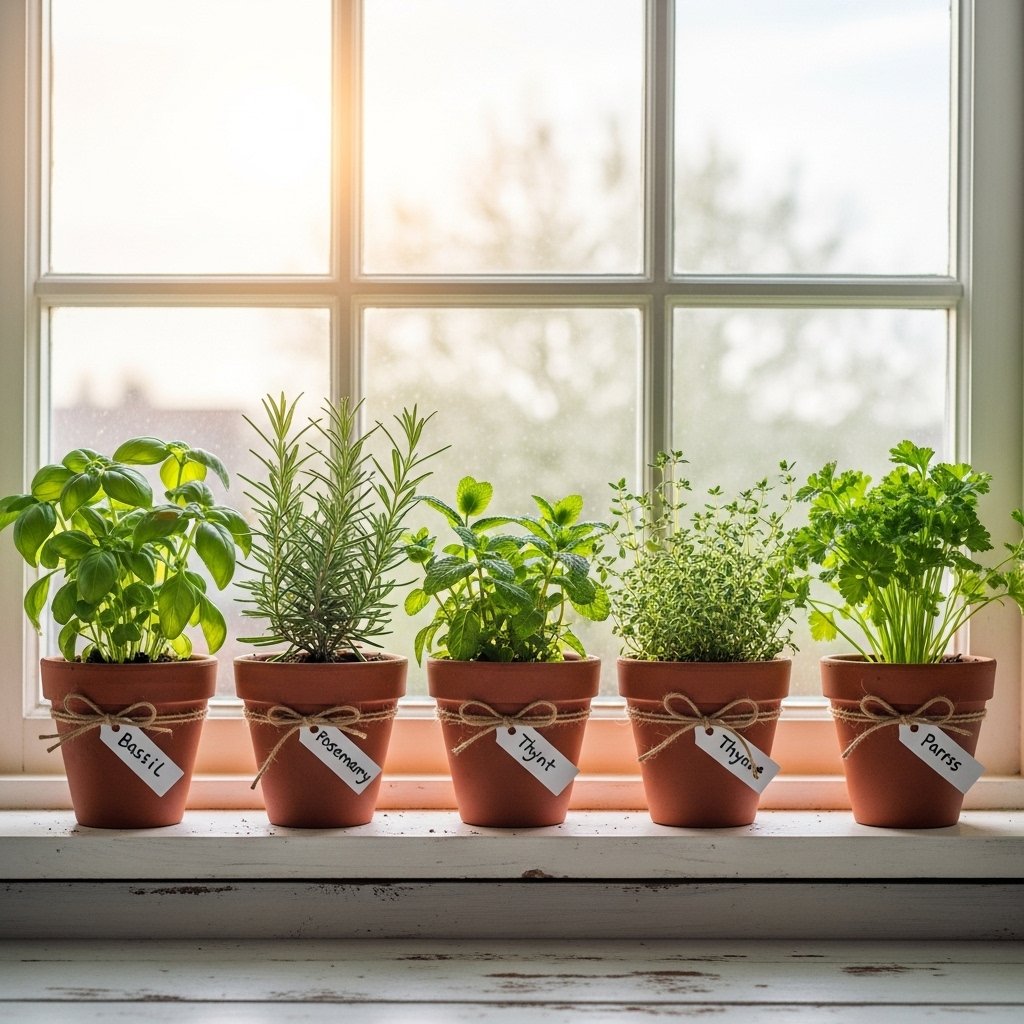
A windowsill herb garden might be the single most perfect spring kitchen decor idea because it is simultaneously beautiful, functional, fragrant, and alive. Line up three to five small terracotta pots along your kitchen windowsill and plant or place fresh herbs: basil, mint, rosemary, thyme, parsley, and chives are all wonderful choices. Label each pot with a simple hand-painted or handwritten tag tied with twine for a charming, personalized touch that feels both rustic and curated.
The visual effect of a row of terracotta pots on a sunlit windowsill is universally appealing. The warm orange-red of the terracotta against the green of the herbs, with light streaming through the window behind them, is a classic spring image. It feels like a small piece of a garden brought inside. When the morning light hits those herbs and the kitchen fills with the faint scent of basil or mint, it is genuinely one of the loveliest sensory experiences you can create in a home.
Practically speaking, a kitchen herb garden also improves your cooking immediately. Fresh herbs are right there when you need them — no running to the store, no wilted bunches in the back of the refrigerator. They encourage you to cook more seasonally and more creatively. Water your herbs consistently but sparingly, make sure they get at least six hours of light, and rotate the pots every few days so all sides get even sun. This is spring kitchen decor that literally grows with you.
💡 Best herbs for beginners: Basil, mint, chives, parsley. They are forgiving, fast-grow
5
Add a Floral Table Runner or Botanical Placemats
Your kitchen table is one of the most visible and most photographed surfaces in the entire room, and yet it is often one of the most overlooked when it comes to seasonal styling. A spring floral table runner or a set of botanical-print placemats can completely change the feel of your table and your kitchen as a whole — and it takes about thirty seconds to put in place.
Look for table runners in soft linen or cotton with printed florals, delicate botanical illustrations, pressed-flower patterns, or simple leaf motifs. The print does not need to be bold or busy — in fact, a subtle, refined floral pattern in muted tones almost always looks more sophisticated and more Pinterest-worthy than something loud. Layer the runner down the center of the table and add a small vase of flowers, a candle, and a few pieces of seasonal fruit on top for a full, styled look.
Placemats are a slightly more practical option if you use your kitchen table for everyday meals. Choose ones in a complementary spring color — dusty rose, sage green, soft mustard — and pair them with white or cream dishes for a clean, fresh table setting. This combination — soft spring placemats, white ceramics, a simple glass of water with a slice of lemon — is endlessly beautiful and photographable. It is the kind of everyday table setting that makes life feel a little more special.
Color, Light & Texture
6
Style Open Shelves With Spring-Toned Ceramics and Plants
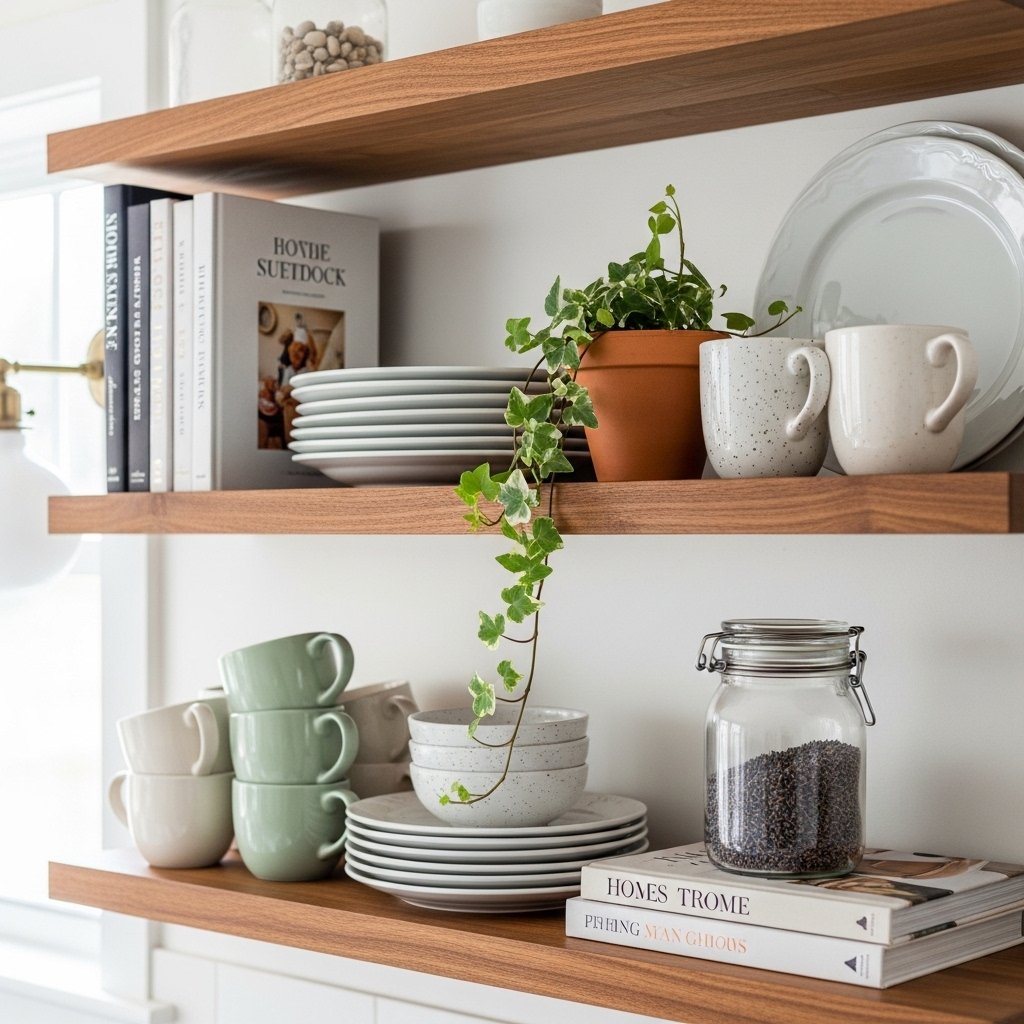
Open kitchen shelves are one of the most powerful styling opportunities in any kitchen, and spring is the perfect time to take full advantage of them. The key principle for beautiful open shelf styling is this: create visual rhythm by varying height, varying texture, and limiting your color palette to two or three complementary tones. For spring, build your shelf palette around soft whites, sage greens, warm creams, and natural wood and terracotta accents.
Start by removing everything from the shelves and giving them a thorough wipe down. Then put back only what you truly love or what is genuinely useful. Stack white plates in groups of three or four. Place a few speckled or hand-thrown mugs in a cluster. Add a small potted succulent or trailing plant for greenery. Tuck in a few taller items — a ceramic jug, a stack of cookbooks with beautiful spines, a glass jar of dried pasta — to vary the height and break the monotony of a flat row of objects.
For spring specifically, consider adding a small vase of dried flowers, a terracotta pot with a fresh herb, or a little ceramic bird figurine. These small seasonal touches signal spring without being over-the-top. Remember: open shelving should look curated, not cluttered. The goal is abundance with breathing room. Every item should feel intentional, and there should always be some empty space so the eye has somewhere to rest.
7
Maximize Natural Light With Sheer Linen Window Treatments
Natural light is, without any exaggeration, the single most transformative element in any kitchen. No decor purchase, no paint color, and no arrangement of objects will ever do what good, clean natural light does. It makes everything glow. It makes colors sing. It creates warmth and energy and beauty that no lamp or light fixture can replicate. And spring brings the most glorious natural light of the year — long hours, soft angles, golden morning light that streams in low and warm.
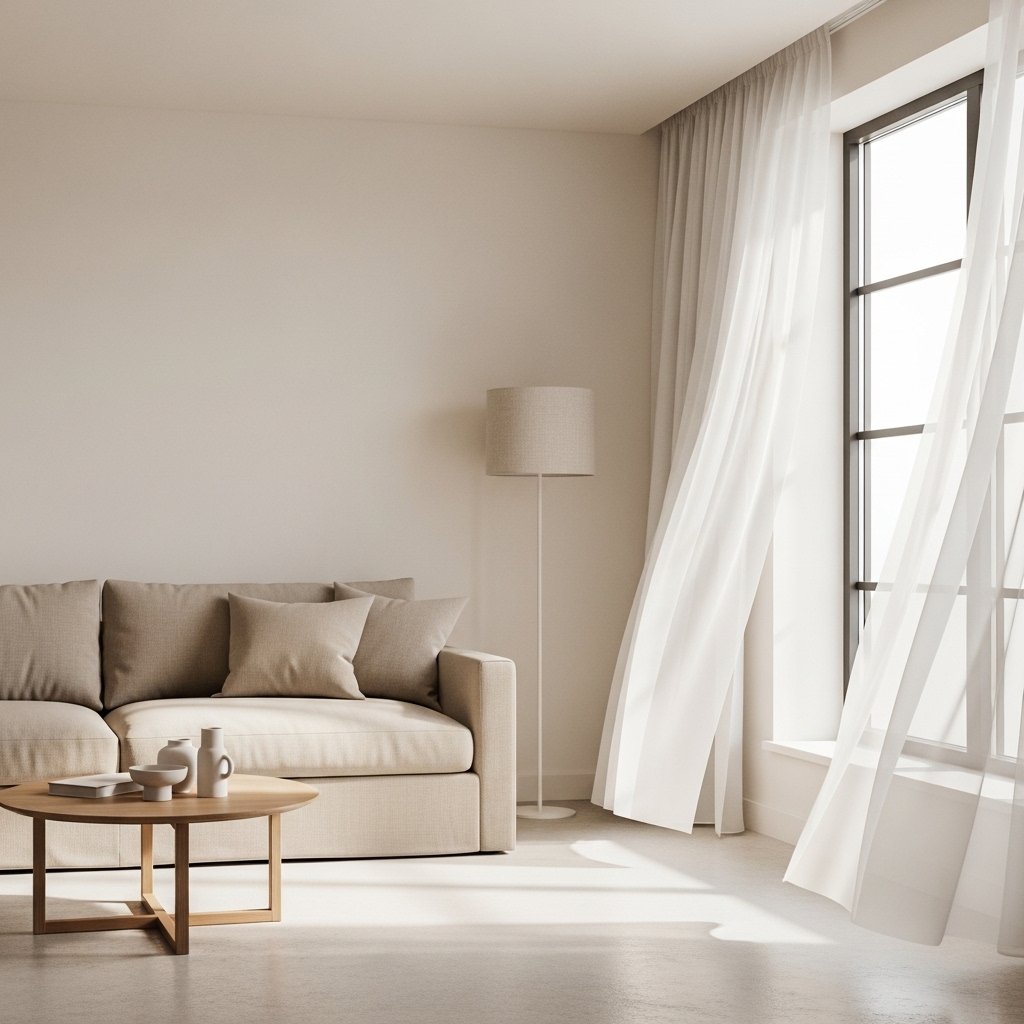
Make the most of it by removing heavy curtains or blinds and replacing them with sheer linen or cotton panels in white or unbleached natural cream. These allow maximum light to flood through while still providing a layer of softness and visual warmth. The way sheer linen moves gently in the breeze from an open window is one of the most beautiful, peaceful, quintessentially spring images you will ever have in your home. It costs almost nothing, but it changes everything.
If you currently have no window treatments at all and prefer to keep it that way, consider placing a small plant or a cluster of glass bottles on the windowsill to frame the view and catch the light. Light coming through glass creates beautiful prism effects on surrounding surfaces, and the silhouette of a leafy plant against a bright window is eternally beautiful. Natural light is your most powerful spring decor tool — use it with intention.
8
Introduce a Spring Color Accent Through Small Accessories
You do not have to repaint cabinets or replace appliances to introduce a new color into your kitchen for spring. The most effective and affordable way to add seasonal color is through small, functional accessories that you use every day anyway. Soap dispensers, sponge holders, dish racks, oil pourers, utensil holders — all of these come in beautiful, design-forward versions that add color and personality to your kitchen without any commitment.
For spring, choose accessories in sage green, dusty rose, soft butter yellow, sky blue, or warm terracotta. These tones feel fresh and seasonal without being garish. A sage green ceramic soap dispenser next to a wooden dish brush is a simple, beautiful counter moment that always photographs well. A terracotta utensil holder filled with wooden spoons and a set of handcrafted kitchen tools creates a warm, artisanal look that feels both functional and intentional.
The key is to choose pieces that work together as a palette rather than just buying individual items randomly. Pick two or three complementary tones and look for accessories in those colors. Even if each individual item is modest, when they come together as a cohesive group, the effect is polished and genuinely beautiful. This approach to spring kitchen decor is one of the most cost-effective and high-impact ways to refresh your space without any major changes.
💡 Budget tip: Even swapping just the soap dispenser and a kitchen towel in a new spring color makes a visible difference.
9
Hang a Handmade Spring Wreath Inside the Kitchen
Most people think of wreaths as a front-door decoration, but a small, beautiful spring wreath hung inside the kitchen — on a cabinet door, on a blank wall near the window, or above the kitchen sink — creates one of the most charming and unexpected touches in spring kitchen decor. It is one of those small details that every guest notices and comments on, and it always gets pinned when it appears in kitchen photos.
For a spring kitchen wreath, look for or make one using dried lavender, eucalyptus, preserved florals, baby’s breath, chamomile, or cotton stems. These dried botanical wreaths are long-lasting — they can stay beautiful for months without any maintenance — and they have a soft, romantic quality that is perfectly suited to spring. The scent of dried lavender in a kitchen is particularly wonderful. A fresh eucalyptus wreath adds a clean, spa-like quality that pairs beautifully with the cooking smells of a busy kitchen.
Hang your wreath with a simple strip of ribbon in a complementary color — a dusty rose ribbon on a eucalyptus wreath, or a sage green ribbon on a dried floral wreath — tied through the top. The ribbon adds another element of color and softness and makes the hanging feel deliberate and styled rather than just functional. This is a spring kitchen decor idea that takes about five minutes to implement and pays dividends for the entire season.
10
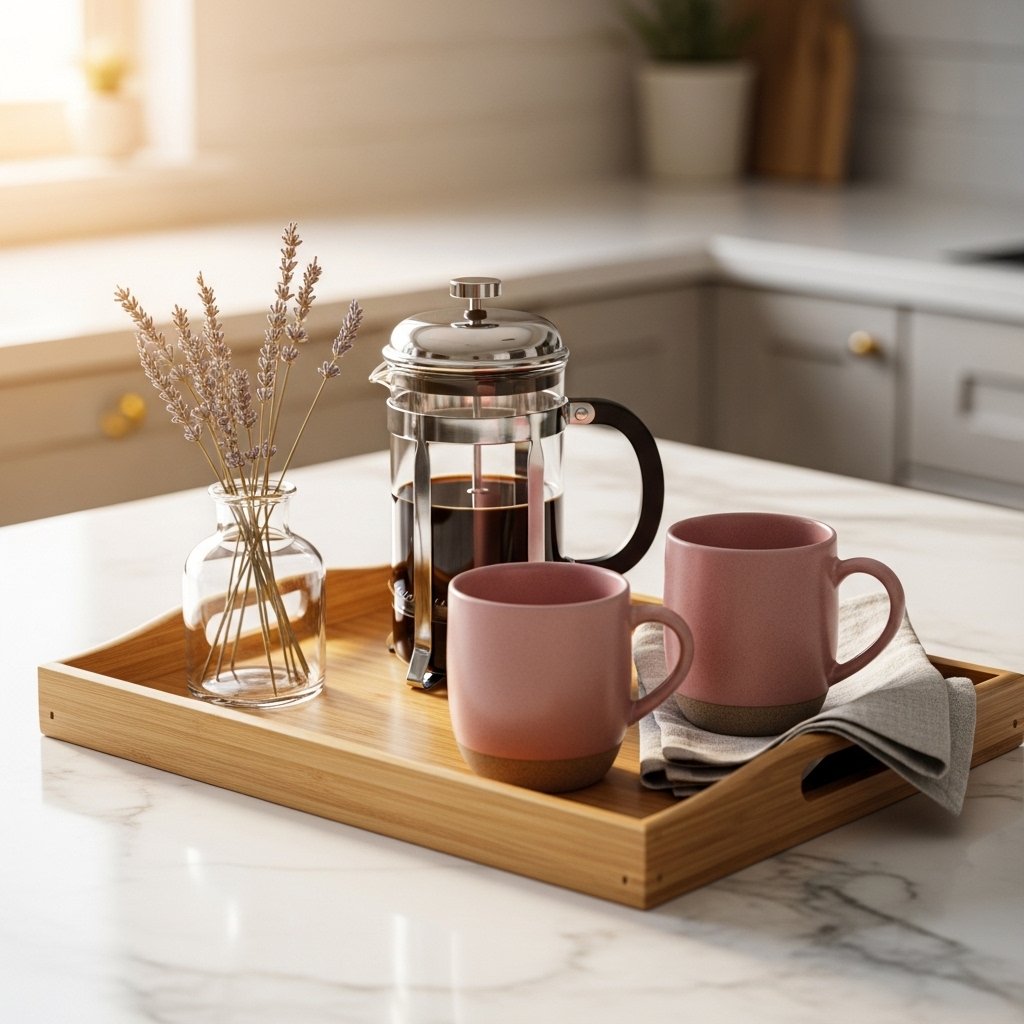
Create a Beautiful, Styled Coffee or Tea Station
The coffee or tea station is one of the most-photographed corners of any kitchen, and for good reason — it represents a daily ritual, a moment of comfort and pleasure that people are naturally drawn to. For spring, take the time to truly style this corner of your kitchen in a way that reflects the season. The result is a spot that feels beautiful every single morning, every single time you reach for your mug.
Start with a wooden or marble tray to anchor and contain the space — this immediately gives the station a polished, intentional look. Arrange your coffee essentials on the tray: your coffee maker or French press, a small milk jug or creamer, and your favorite mug. Choose spring-colored mugs for the season — dusty rose, sage green, soft blue, or speckled cream. Add a small vase of dried flowers or a single fresh stem. Fold a linen cloth nearby.
The styling principle here is similar to the fruit bowl — vary the heights and textures of your objects and keep the overall color palette cohesive. Your tallest item (the coffee maker or French press) goes in the back. Medium-height items (the mug, a small plant, a jar of coffee beans) go in the middle. Flat items (the linen cloth, a small coaster) go in the front. This creates a layered, photographable still life that makes every morning feel like the opening scene of a beautiful spring film.
Spring kitchen decor is not about buying new things. It is about bringing the season inside — its colors, its textures, its light, its life — and letting them change how the room feels.
11
Introduce Natural Texture With Rattan, Wicker, and Woven Accents
Spring decor has a deep and beautiful relationship with natural materials. Rattan, wicker, seagrass, and woven textures bring warmth, organic beauty, and a sense of handcrafted care that feels perfectly seasonal. They soften the hard surfaces of a kitchen — the tile, the countertop, the stainless steel — and add a layer of warmth and humanity that no synthetic material can replicate. Incorporating these textures into your spring kitchen decor is one of the most effective ways to create a space that feels genuinely warm and welcoming.
A rattan tray used to organize and style your spice jars or cooking oils is both practical and beautiful. A woven seagrass basket on a lower shelf or in a corner for holding onions, potatoes, or bread creates a farmers-market quality that is deeply appealing. Woven placemats in natural, undyed fibers layered beneath white dishes create a table setting that feels earthy and elemental. Even a single wicker basket on a high shelf, filled with extra linens or keeping something stored but beautiful, contributes to the overall texture of the space.
What makes these natural textures so powerful in spring is that they pair beautifully with everything else that is happening seasonally — the fresh flowers, the herb pots, the soft linen towels, the warm wood accents. Natural materials speak the same visual language as the spring garden outside your window. They make your kitchen feel connected to the natural world, which is ultimately what spring decor is all about.
12
Use a Cake Stand or Pedestal as a Spring Styling Platform
A pedestal cake stand is one of the most versatile and underutilized styling tools in any kitchen. Yes, it is wonderful for cakes and pastries — but in spring, use it as a beautiful riser for a seasonal vignette. Place a cluster of small potted succulents on it. Stack a few colorful Easter eggs in soft matte tones. Arrange a collection of spring-colored macarons or cookies. Or simply use it as a riser for a small vase of spring flowers, elevating them to a height where they become a true centerpiece rather than just sitting flat on the counter.
The pedestal adds instant height and elegance to any grouping of objects. A simple cake stand in white porcelain, clear glass, or matte terracotta works beautifully with spring decor. Place it on the kitchen counter, on the table, or on the kitchen island. Surround it with a few complementary objects — a small vase, a ceramic bird, a folded linen napkin — and you have created a spring vignette that looks genuinely styled and intentional.
What makes the cake stand particularly effective as a styling piece is that it creates immediate visual focus. The eye goes to the elevated object first, which means whatever you place on it is immediately given importance and beauty. For spring kitchen decor, this is a powerful tool — use it to showcase your most beautiful seasonal elements and draw the eye exactly where you want it to go.
13
Add Botanical Wall Art or a Spring-Themed Print
Wall art is often the missing piece in kitchen decor. Many kitchens have bare walls — not because the homeowner does not care about aesthetics, but because the kitchen is a functional space and art somehow feels out of place there. But a single well-chosen piece of art can anchor the entire aesthetic of a kitchen and give the whole space a sense of intention and personality that nothing else can provide.
For spring kitchen decor, botanical prints are the most obvious and most effective choice. Watercolor florals, detailed botanical illustrations in the style of Victorian nature books, simple line drawings of herbs and wildflowers, or abstract floral paintings in spring tones all work beautifully. Frame your chosen print in a light natural wood frame or a thin black or brass frame, depending on your kitchen’s existing aesthetic. Hang it at eye level where it will be seen naturally as you move through the space.
The wonderful thing about printable art is that it is incredibly affordable and accessible. Websites like Etsy, Creative Market, and many independent artist shops sell beautiful spring botanical prints as instant digital downloads for just a few dollars. You can print them at home or at a local print shop, frame them yourself, and have a piece of art on your kitchen wall for under ten dollars total. This is spring kitchen decor that has genuine cultural and aesthetic value at almost no cost whatsoever.
💡 Search: “spring botanical kitchen print” on Etsy for hundreds of beautiful, affordable options.
14
Display Beautiful Cookbooks as Seasonal Decor Objects
Your cookbook collection is a decorating resource you probably walk past every day without truly seeing. Beautiful cookbooks — especially ones with stunning photography, pastel covers, or botanical imagery on the spine — are design objects in their own right. In spring, bring two or three of your most visually beautiful cookbooks out of the cabinet and stand them upright on the counter or the windowsill. They add color, personality, cultural depth, and a story to your kitchen that no mass-produced decorative object ever could.
Stand them slightly ajar rather than perfectly flat — a book leaning slightly open or standing at a small angle looks more natural and lived-in than a rigid straight-up display. Add a small potted plant next to them, or a single fresh flower in a tiny vase. Place them near the window so the light catches the colors on the cover. The combination of beautiful books, a plant, and natural light is one of those effortlessly lovely still-life arrangements that always resonates deeply with people on Pinterest.
If you want to lean further into the spring theme, look for cookbooks that celebrate seasonal cooking, gardens, or farm-to-table food — Nigel Slater’s work, Diana Henry’s books, or any of the beautiful Italian or French country cooking books all tend to have covers and imagery that feel inherently spring-like. Books about flowers, foraging, or the Mediterranean kitchen all work beautifully in this context. Let your bookshelf tell the story of the season you are cooking through.
15
Add Trailing Green Plants to High Shelves and Cabinet Tops
One of the most dramatic and visually lush things you can do to a kitchen for spring is to add trailing plants to high shelves or the tops of tall cabinets. A pothos, heartleaf philodendron, tradescantia, or string of pearls plant draping down the side of a high shelf creates a lush, garden-like cascading effect that completely changes the feeling of the entire room. The kitchen feels alive in a way that only living plants can create.
These trailing plants are also wonderfully low-maintenance, which makes them ideal for a kitchen environment. Pothos in particular is nearly indestructible — it tolerates low light, irregular watering, and the temperature fluctuations of a busy kitchen. It grows quickly and trails beautifully, and its heart-shaped leaves in deep green (or the beautiful golden or marble queen varieties) look stunning against white or cream cabinets. Place the pot on the highest shelf and let the vines trail naturally down the side of the shelving unit.
For a more styled look, you can also hang small wall-mounted planters at different heights on a kitchen wall to create a vertical garden effect. This is particularly beautiful in kitchens with a blank wall near the sink or along one side of the room. Mix trailing plants with compact upright ones for variety. Add a small mounted shelf for a potted herb at a practical height and a trailing plant at the very top. A vertical garden wall in a kitchen is one of the most pinned and loved spring kitchen decor ideas of the last few years.
16
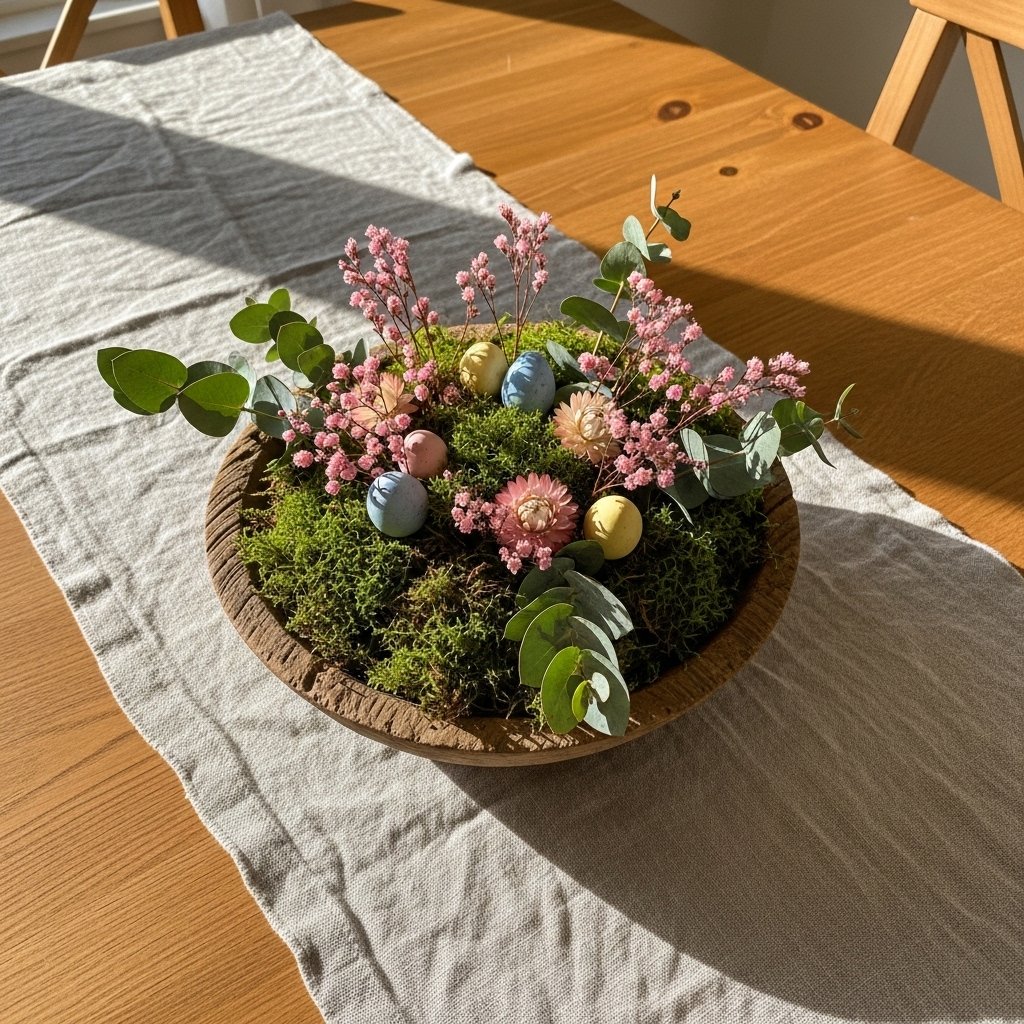
Style Your Kitchen Table With a Full Spring Centerpiece
Your kitchen table is where meals are eaten, homework is done, conversations happen, and memories are made. It is the most human and most used surface in the home, and it deserves a beautiful spring centerpiece that makes every gathering around it feel a little more special. A spring centerpiece does not need to be elaborate or expensive — it simply needs to be thoughtful and seasonal.
One of the most beautiful and affordable spring table centerpieces is a low wooden bowl or ceramic dish filled with a combination of mossy green floral foam or dried moss, a few fresh or dried flowers (wildflowers work beautifully here), some spring greenery, and a few small decorative eggs in soft, matte colors for early spring. Keep the arrangement low so it does not obstruct sightlines or conversation across the table — the rule of thumb is that a table centerpiece should never be taller than about eight inches.
As spring progresses, evolve your centerpiece. Move from early spring egg-and-flower arrangements into pure floral bouquets in loose, wildflower-style vases for mid-spring. By late spring, a tall clear glass vase with an abundant bunch of garden roses, sweet peas, or lilac stems creates an incredibly romantic, generous, and abundant feel that is the visual essence of late spring living. Keep a small linen table runner beneath the centerpiece for an additional layer of seasonal texture.
Spring Kitchen Styling Essentials: Quick Reference
- Always style objects in groups of three or five — odd numbers look more natural and organic than even numbers
- Vary the height of your objects in every vignette — create a tall, medium, and low point in each grouping
- Stick to a palette of two to three spring colors across your whole kitchen so everything coheres visually
- Use real plants and fresh flowers wherever possible — they add life and scent that no artificial decor can replicate
- Natural materials (wood, linen, terracotta, rattan, ceramic) always look beautiful and photograph best in spring settings
- Declutter before you decorate — a clean counter with three beautiful objects is always more impressive than a crowded counter with twenty
- Let natural light do most of the work — open the curtains, clean the windows, and let spring come in
17
Light a Spring-Scented Candle as a Daily Ritual
Spring kitchen decor is not only a visual experience — it is a sensory one. The scent of your kitchen is part of its atmosphere, and a beautiful spring candle transforms the space in ways that no visual element alone can achieve. Choose a candle in a ceramic, stone, or amber glass vessel that looks beautiful on the counter, and select a scent that evokes spring: fresh linen, white tea, garden rose, green herb, neroli blossom, or clean cucumber and mint are all wonderful options.
Place the candle on a styled tray with one or two other small objects — a small potted plant, a few polished stones, a folded cloth napkin — and light it in the morning while you make coffee, or in the evening while preparing dinner. The ritual of lighting a candle in a beautiful vessel makes the act of cooking feel more intentional, more pleasurable, and more connected to the sensory richness of the season. It is a daily, tiny luxury that costs almost nothing but gives a great deal.
For the most beautiful visual effect, position your candle where the afternoon light will catch the flame — near a window, or on the kitchen island where it can be seen from the adjoining room. A candle’s light in a warm spring kitchen, with flowers nearby and herbs on the windowsill, creates a level of warmth and beauty that is almost cinematic. This is the spring kitchen that people dream of and pin obsessively — not because it is expensive or elaborate, but because it is alive with sensory care and intention.
18
Use a Vintage or Antique Vessel as Your Flower Vase
One of the most effortlessly beautiful and unique things you can do in spring kitchen decor is to use a vintage or antique vessel as your flower vase instead of a standard vase. An old stoneware crock, a vintage enamel pitcher, an antique milk jug, a weathered ceramic pot from a flea market, or even a beautiful old wine bottle — these vessels give your spring flowers a context and a story that elevates the entire arrangement from decoration to art.
The contrast between an old, imperfect, characterful vessel and fresh, delicate spring flowers is one of the most beloved visual combinations in all of home decor photography. The roughness of old stoneware against soft peonies, the utilitarian simplicity of an enamel pitcher holding a loose bunch of wildflowers, the beauty of a terracotta amphora with a single stem of cherry blossom — these combinations always feel beautiful, always feel considered, and always resonate deeply with people who love aesthetic, meaningful home spaces.
Thrift stores, estate sales, flea markets, and vintage markets are full of beautiful old vessels at very affordable prices. A stoneware crock that costs three dollars at a thrift store can become the most beautiful and talked-about element in your spring kitchen. Keep your eyes open all year and collect beautiful old vessels as you find them. By spring, you will have a whole curated collection to choose from, and your flower arrangements will always have a distinctive, one-of-a-kind quality that no store-bought vase can match.
19
Refresh Your Kitchen With a Spring-Scented Cleaning Ritual
Spring cleaning is perhaps the oldest and most satisfying form of spring home decor there is. Before any flower goes in a vase, before any linen towel gets draped over the oven handle, before any herb gets planted in a terracotta pot — clean the kitchen thoroughly. Not just a wipe-down, but a full, deep, intentional seasonal clean. Empty the cabinets and wipe the shelves. Descale the kettle. Clean behind the appliances. Wash the windows inside and out until the glass is perfectly clear. Scrub the sink until it gleams like new.
Make this cleaning ritual a sensory and intentional experience rather than just a chore. Use a cleaning spray with a fresh spring scent — lemon, mint, eucalyptus, or white grapefruit. Light a candle while you work. Play music that feels like spring. The act of deep cleaning your kitchen with intention and care is a form of preparation — you are making the space ready to receive the season. A clean, fresh-smelling kitchen is the most powerful spring decor of all because it is the foundation upon which everything else sits.
When the cleaning is done and the kitchen is sparkling, the spring decor you add on top of it will have maximum impact. Fresh flowers on a clean white marble counter look completely different from fresh flowers on a cluttered, dusty counter. Herbs on a clean, sun-lit windowsill look completely different from herbs on a smeared, dim one. A beautifully styled open shelf in a clean kitchen looks like a magazine photo. In a dirty kitchen, it just looks like more clutter. Clean first. Decorate second. The results will be transformative.
20
Bring in a Seasonal Scent Through Fresh Eucalyptus Bundles
Fresh eucalyptus is one of the most versatile and beautiful botanical elements you can use in spring kitchen decor. A bundle of fresh eucalyptus stems tied with twine and hung from a kitchen cabinet knob, draped over a shelf, or placed loosely in a wide-mouthed vase creates a beautiful, architectural, deeply fragrant element that fills the whole room with a clean, green, herbaceous scent.
Eucalyptus is also incredibly long-lasting compared to most fresh botanicals. A bundle of fresh eucalyptus will last several weeks before drying, and when it dries, it maintains its beautiful silvery-green color and becomes slightly more sculptural and refined. You get fresh botanical beauty followed by a beautiful dried arrangement — all from the same bundle. This makes eucalyptus one of the best value, highest-impact botanical choices for spring kitchen decor.
Pair eucalyptus with spring flowers for a mixed arrangement that has both delicacy and structure: the round, soft blooms of roses or ranunculus against the long, architectural stems of eucalyptus is a classic combination for good reason. You can also lay eucalyptus branches along the center of the kitchen table as a simple, sculptural table runner — a line of eucalyptus stems laid end-to-end down the center of a linen-covered table, with a few flower heads scattered among them, is one of those beautifully simple spring table styling ideas that is impossible not to love.
21
Deep Declutter and Create Beautiful Negative Space
The final idea on this list is also the most important — and the most counterintuitive. The most powerful thing you can do for your spring kitchen decor is to remove things, not add them. A deeply decluttered kitchen, with clean counters and only the most beautiful and intentional objects remaining in view, is the foundation upon which every other idea on this list will shine. And in a spring context, that clear, open, light-filled space is itself a form of decoration — it is the visual equivalent of a fresh start.
Go through every surface in your kitchen and ask yourself honestly: does this need to be here? Does it serve a function I use daily, or does it bring me genuine visual pleasure? If the answer to both questions is no, put it away. Clear the counters as much as you can bear to. Store things in cabinets and drawers that do not need to be on display. The less there is on your surfaces, the more beautiful everything that remains becomes. This is the fundamental principle of minimal spring styling, and it applies just as powerfully to a small apartment kitchen as to a large farmhouse kitchen.
Once your kitchen is decluttered and clean, every spring touch you add will have maximum impact. One beautiful vase of flowers on a clear marble counter is a statement. Three herb pots on a clean windowsill are a garden. A styled tray on a decluttered counter is an art installation. Negative space — the empty, clear surface around your objects — is what gives those objects their power and their beauty. Do not be afraid of empty space in your kitchen. Embrace it. It is the most elegant, most aspirational, and most spring-like quality your kitchen can have.
💡 The Rule of Three: Keep only three things on each counter zone. Everything else goes in a drawer or cabinet.
Your Spring Kitchen Decor Checklist
- Deep clean the kitchen — every surface, every shelf, every window
- Declutter counters and remove anything that does not serve daily use or genuine beauty
- Add fresh seasonal flowers in a beautiful vessel
- Swap kitchen towels for soft spring linen in pastel tones
- Plant a windowsill herb garden in terracotta pots
- Style the open shelves with spring-toned ceramics and a small plant
- Add sheer linen curtains to maximize natural light
- Create a styled coffee or tea station on a wooden or marble tray
- Introduce woven, rattan, or natural textile textures
- Hang a spring botanical wreath inside the kitchen
- Add wall art — a botanical print in a simple frame
- Style a table centerpiece that evolves through the season
- Display cookbooks and beautiful objects as decor
- Light a spring-scented candle as a daily sensory ritual
- Add trailing plants to high shelves for a lush, garden effect
Frequently Asked Questions About Spring Kitchen Decor
What are the best colors for spring kitchen decor in 2025?
The most beautiful and trending spring kitchen colors for 2025 are sage green, dusty rose, warm terracotta, soft butter yellow, sky blue, and warm cream or off-white. These colors feel fresh, natural, and seasonally appropriate without being overwhelming or difficult to work with. The best approach is to choose two or three of these colors and use them consistently across your textiles, accessories, plants, and ceramics. This creates a cohesive spring palette that feels intentional and designed rather than random or scattered. Sage green in particular is the standout spring kitchen color of the moment — it pairs beautifully with wood tones, white surfaces, terracotta, and florals of almost any color.
How do I decorate my kitchen for spring on a very small budget?
Spring kitchen decor on a small budget is absolutely achievable and can be genuinely beautiful. The highest-impact and lowest-cost changes are: buying a bunch of fresh flowers from the grocery store (under five dollars), washing and organizing everything you already have, rearranging your existing ceramics and plants for a fresh display, and decluttering the counters. Beyond that, a new set of linen kitchen towels in spring tones, a small potted herb from the garden center, and a printed botanical art print from Etsy can all be done for under thirty dollars total. The reality is that spring kitchen decor is more about editing, rearranging, and bringing nature inside than it is about buying new things. Clean and declutter first — that costs nothing and is the most transformative step.
What plants are best for spring kitchen decor?
The best plants for spring kitchen decor are ones that thrive in indoor conditions while contributing beauty and, ideally, fragrance or function. Fresh herbs — basil, mint, rosemary, thyme, and chives — are the top choice because they are beautiful, scented, and useful in cooking. Trailing plants like pothos, heartleaf philodendron, and tradescantia are wonderful for high shelves because they cascade beautifully and are nearly indestructible in kitchen conditions. Small succulents and cacti work well on sunny windowsills. Fresh eucalyptus branches in a vase provide both architectural beauty and a clean, fresh scent that fills the whole kitchen. And of course, fresh-cut spring flowers — while technically cut rather than potted — are the most powerful plant element you can add to a spring kitchen for seasonal impact.
How can I make a small kitchen feel fresh and bright for spring without making it feel cluttered?
The golden rule for decorating a small kitchen for spring is: declutter more than you add. Start by removing everything from your counters and only putting back the absolute essentials. Then add your spring touches very selectively — one vase of flowers, one herb pot, one new linen towel. In a small kitchen, three beautiful, intentional objects will always look more impressive and feel more spacious than ten mediocre ones. Maximize natural light by removing or replacing heavy window treatments with sheer panels. Use vertical space — shelves, wall plants, a wreath — rather than spreading objects across horizontal surfaces. Keep your color palette tight and consistent. And embrace the power of a clean, empty surface — it is not a design failure, it is a design choice, and in a small spring kitchen, it is the most elegant choice of all.
How often should I change my spring kitchen decor throughout the season?
The most beautiful aspect of spring kitchen decor is that it naturally evolves with the season, and you should let it. Change your flowers every one to two weeks as different varieties come into peak season — from tulips and daffodils in early spring, to peonies and ranunculus in mid-spring, to roses, sweet peas, and lilac in late spring. Update your fruit bowl as seasonal fruits become available. As the weather warms, you can simplify — lighter, sparser arrangements feel more appropriate in late spring than the full, lush arrangements of early spring. Let the season guide your choices rather than maintaining a static display all season long. This keeps your kitchen feeling alive, current, and genuinely connected to the natural rhythm of the year.
Your Spring Kitchen Is Ready to Bloom
Spring kitchen decor is ultimately a love letter to the season. It is a way of saying: I notice the shift in the light. I feel the warmth coming back. I want to bring that beauty inside and live surrounded by it. You do not need a renovation. You do not need a large budget. You do not need to be a professional stylist or interior designer.
You just need fresh flowers, a little intention, some clean surfaces, and the willingness to let the season in. Start with one idea from this list — just one. Buy a bunch of tulips. Plant a basil pot. Swap a towel. Open the curtains wider. That one small change will lead to another, and before you know it, your kitchen will feel genuinely, beautifully different. Lighter. Fresher. More alive.

Recent Comments